Graph theory is the branch of mathematics that studies networks of connected objects. A graph is simply a collection of points, called vertices, joined by lines, called edges, and this elegant idea turns out to describe an astonishing range of real world systems.
In graph theory, what matters is not distance, size, or shape but connection: which points are linked to which. A graph could be drawn in many ways, stretched or rearranged, yet remain the same graph, because only the pattern of links counts. This abstraction is the source of the theory's surprising power.
This simple view lets a single framework describe road maps, social networks, the Internet, molecules, family trees, and the flow of electricity, all as patterns of vertices and edges. Wildly different systems become the same kind of mathematical object, so that an insight about one can illuminate all the others.
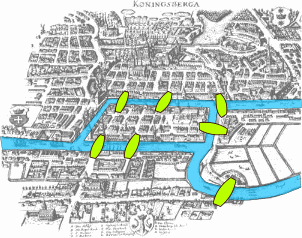
Graph theory was born in 1736, when the great mathematician Leonhard Euler tackled a puzzle about the city of Königsberg and its seven bridges. People wondered whether they could walk through the city crossing each bridge exactly once and return home. Euler set out to settle the question for good.
Euler proved the walk was impossible, and in doing so he made a leap of genius: he stripped the problem down to points and connections, ignoring everything else about the city. By reducing the puzzle to its bare structure, he invented a whole new way of thinking and founded graph theory.
From these beginnings grew a rich vocabulary. A path traces a route from one vertex to another; a cycle returns to where it began; a tree is a graph with no cycles, branching like its namesake. Such structures appear everywhere, from family trees to the organization of computer files.
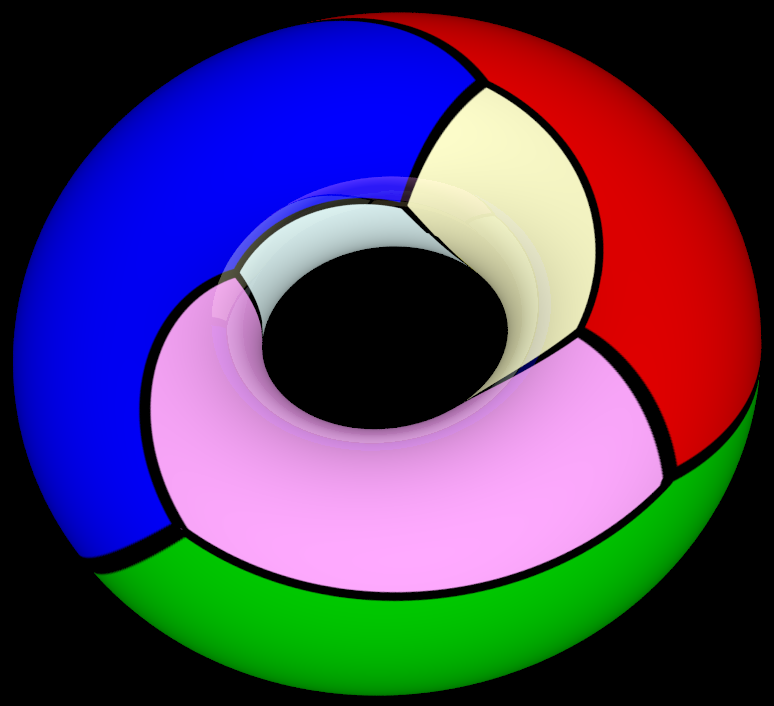
Graph theory asks deep questions about connection: How can a network be coloured so that no two linked points share a colour? What is the shortest route between two points? How robust is a network if some links fail? These questions, simple to state, can be subtle and difficult to answer.
Today graph theory is everywhere in science and technology. It powers the algorithms that find routes in navigation apps, rank web pages, recommend friends on social media, and schedule complex tasks. It helps biologists map how proteins interact and engineers design reliable networks of every kind.
Few branches of mathematics combine such simple foundations with such broad and practical reach. From a puzzle about bridges grew a field that now underlies much of the connected, computerized world, a testament to how a single clear idea can ripple outward across centuries.
