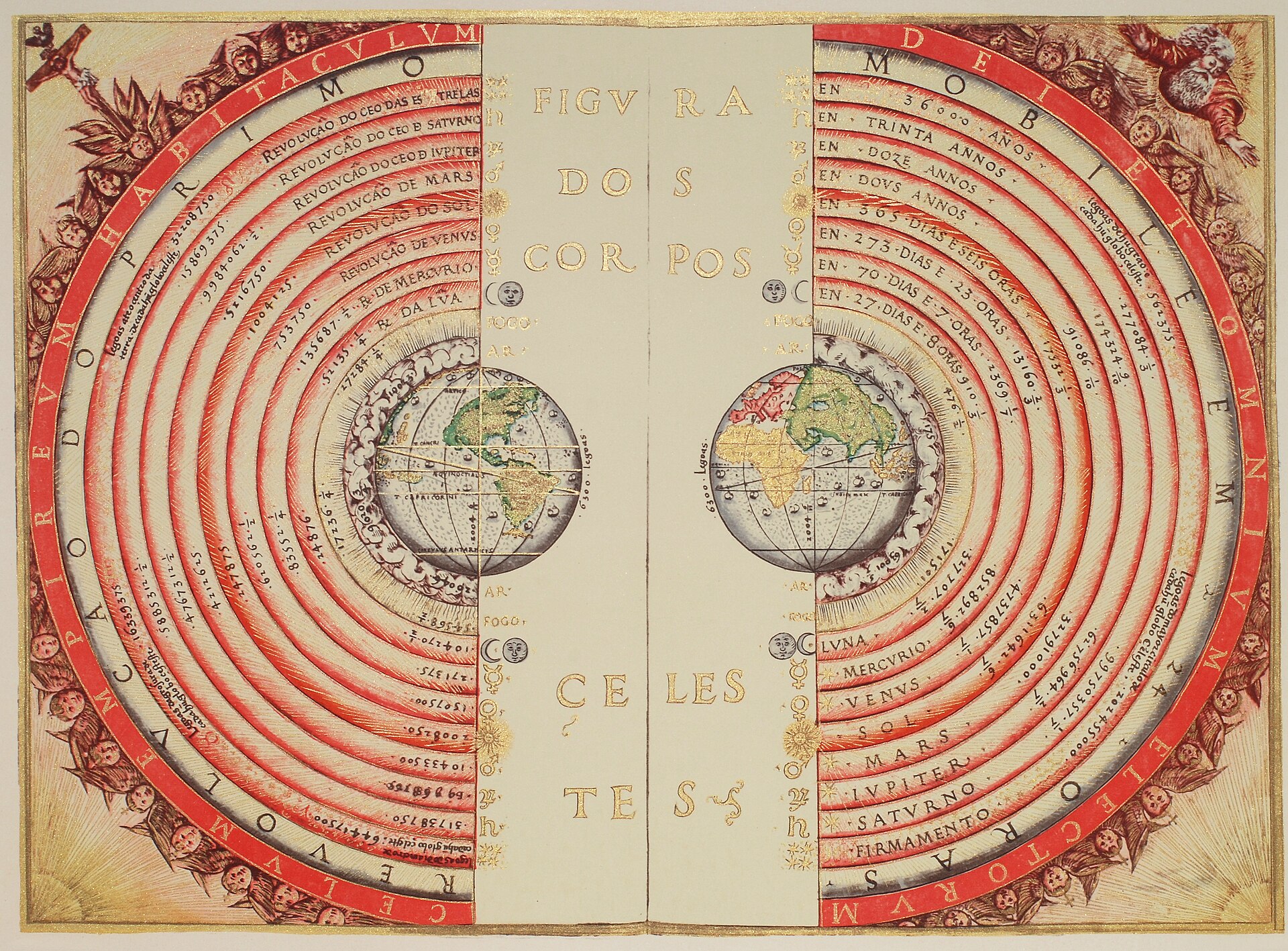
The geocentric model was the ancient belief that the Earth sits motionless at the center of the universe, with the Sun, Moon, planets, and stars all revolving around it. It was the dominant view for nearly two thousand years before being replaced by the Sun centered model, in one of the most consequential shifts in the history of human thought.
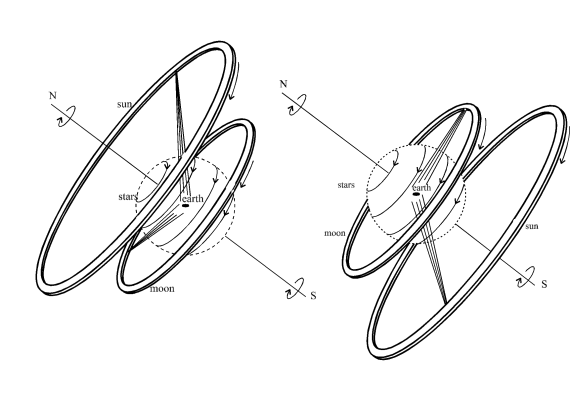
The instinct to place the Earth at the center is very old. Early Greek thinkers such as Anaximander imagined the Earth resting at the middle of the heavens, with the stars and other bodies set at various distances around it, an early attempt to bring order to the night sky.
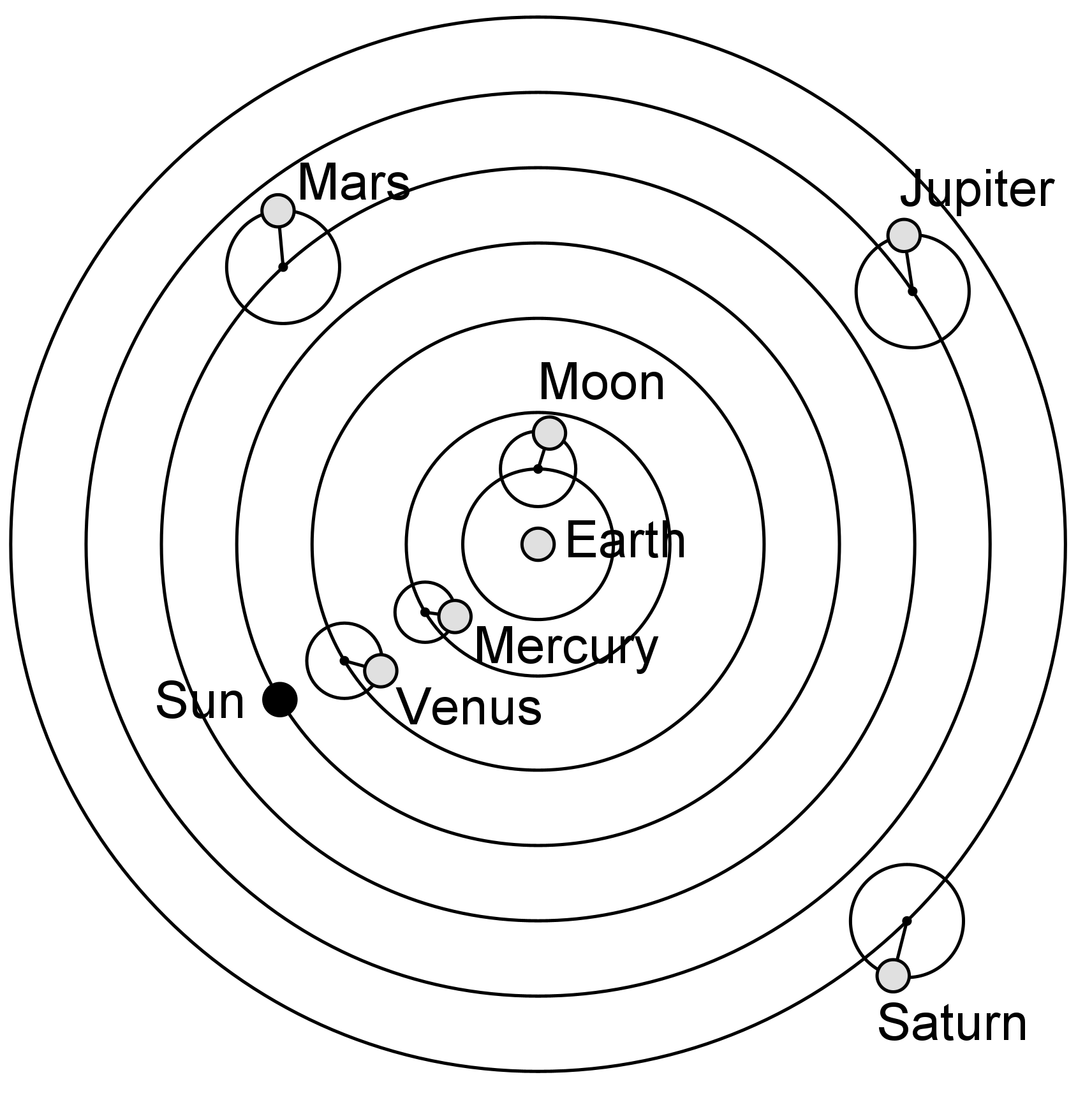
Refined by the astronomer Ptolemy in the second century AD, the model placed a still Earth at the center and used an elaborate machinery of circles within circles, called epicycles, to reproduce the looping, sometimes backward motions of the planets across the sky.
For all its complexity, the model matched everyday experience well. The ground feels solid and unmoving while the heavens visibly wheel overhead each night, and the system made accurate enough predictions of planetary positions to remain useful for centuries. It also fit comfortably with religious and philosophical ideas that placed humanity at the center of creation.
The model began to fall in 1543, when Nicolaus Copernicus proposed that the Earth and the other planets orbit the Sun. At first the idea was offered mainly as a simpler piece of mathematics, but it grew into a profound challenge to the entire ancient picture of the cosmos.
The case grew decisive in the early seventeenth century. Galileo's telescope revealed four moons circling Jupiter, proving that not everything orbits the Earth, and showed that Venus goes through a full cycle of phases that only a Sun centered system can explain. Johannes Kepler then found that the orbits are not perfect circles at all but ellipses, sweeping away the last need for epicycles.
The shift to the heliocentric model was far more than an astronomical correction. It displaced humanity from the literal center of creation and helped set the pattern for modern science, in which careful observation can overturn even the most deeply held and authority backed beliefs. The struggle it caused, including Galileo's trial, makes it one of the defining episodes in the long relationship between evidence and established belief.
