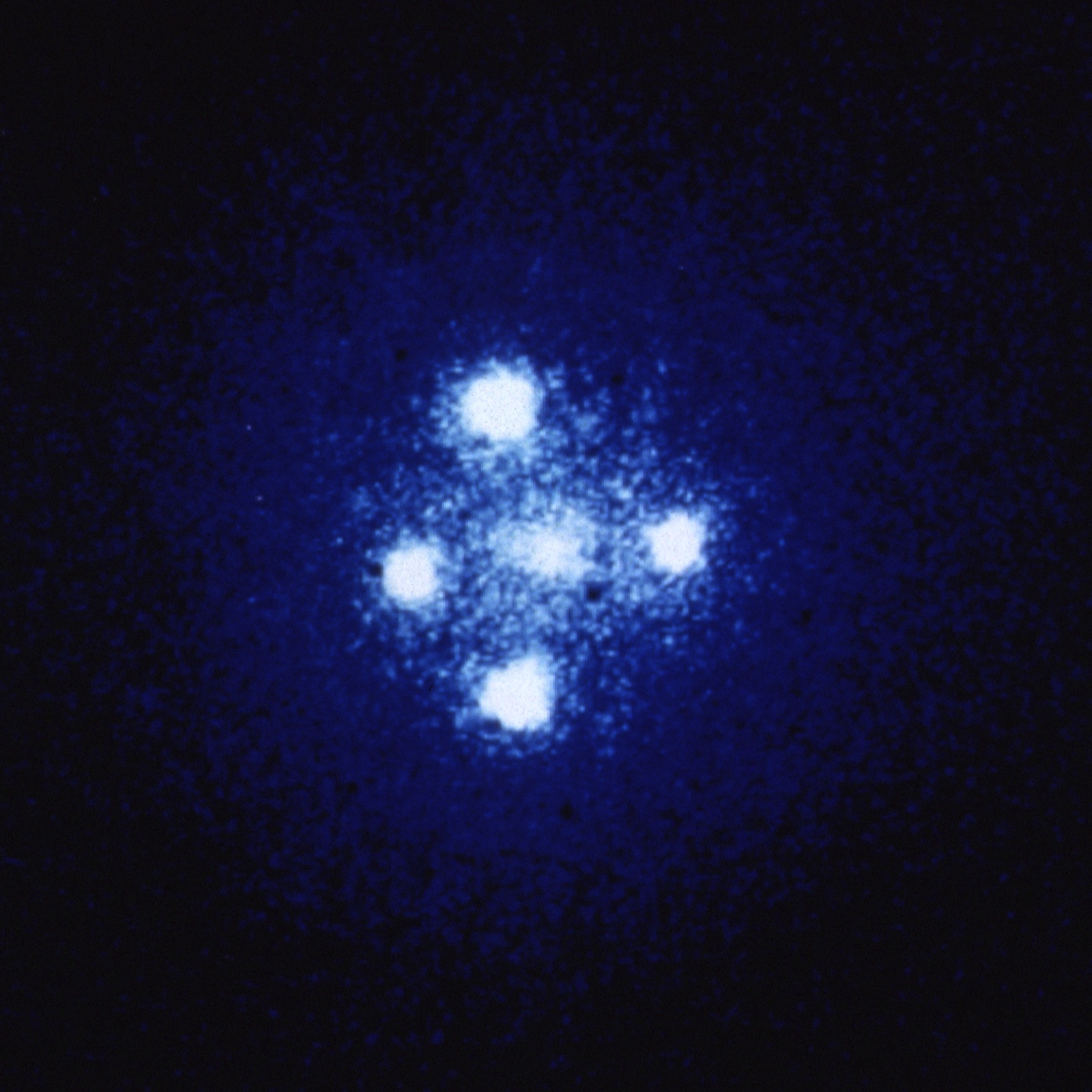
General relativity is Albert Einstein's theory of gravity, published in 1915. It reimagines gravity not as a force pulling objects together but as the curvature of spacetime itself: mass and energy bend the geometry of space and time, and objects simply follow the straightest available paths through that curved geometry.
Einstein worked toward the theory for a decade after his 1905 special relativity, guided by the insight that a person in free fall feels no gravity. He completed the field equations in November 1915, and they have stood without modification for more than a century.
The core claim is that matter tells spacetime how to curve, and curved spacetime tells matter how to move. A planet orbits the Sun not because of an invisible tether but because the Sun's mass warps the spacetime around it, and the planet follows the natural path through that warp. The theory predicts phenomena that Newtonian gravity cannot, including the bending of starlight near massive bodies.
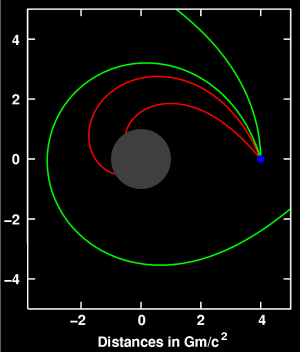
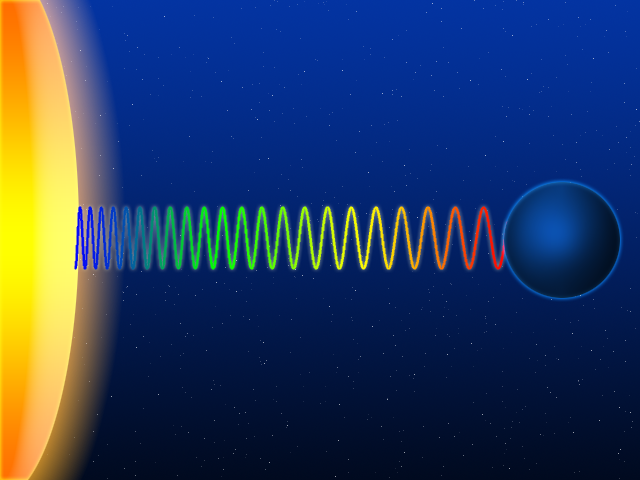
The theory's predictions have been verified with extraordinary precision. Starlight was observed bending around the Sun during the 1919 eclipse; clocks run measurably slower in stronger gravity, an effect the satnav system in every phone must correct for; and gravitational waves, ripples in spacetime from colliding black holes, were detected directly in 2015.
For all its success, general relativity is not the final word. It is mathematically incompatible with quantum mechanics, and reconciling the two into a theory of quantum gravity remains one of physics' greatest open problems. Inside black holes and at the universe's first instant, the theory predicts its own breakdown, a sign that a deeper theory is still waiting to be found.
