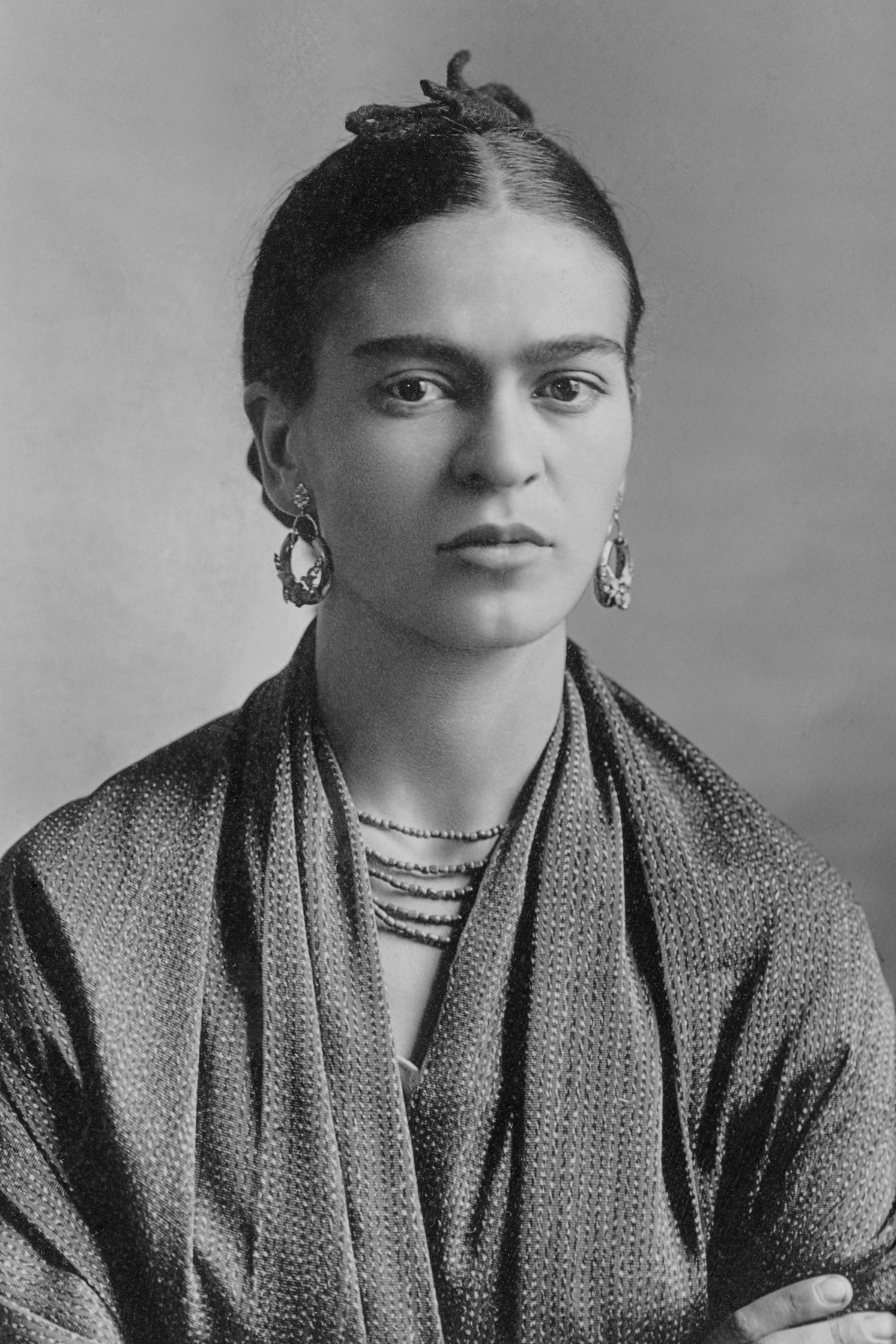
Frida Kahlo (1907 to 1954) was a Mexican painter known for her vivid, deeply personal self portraits and her use of Mexican folk traditions. Once overshadowed, she is now one of the most celebrated and recognizable artists in the world.
Kahlo painted what she knew most intimately: herself. Many of her best known works are self portraits, in which she gazes out with unflinching directness, often surrounded by symbolic plants, animals, and imagery drawn from Mexican culture. Through them she explored her identity, her pain, and her inner world with rare honesty.
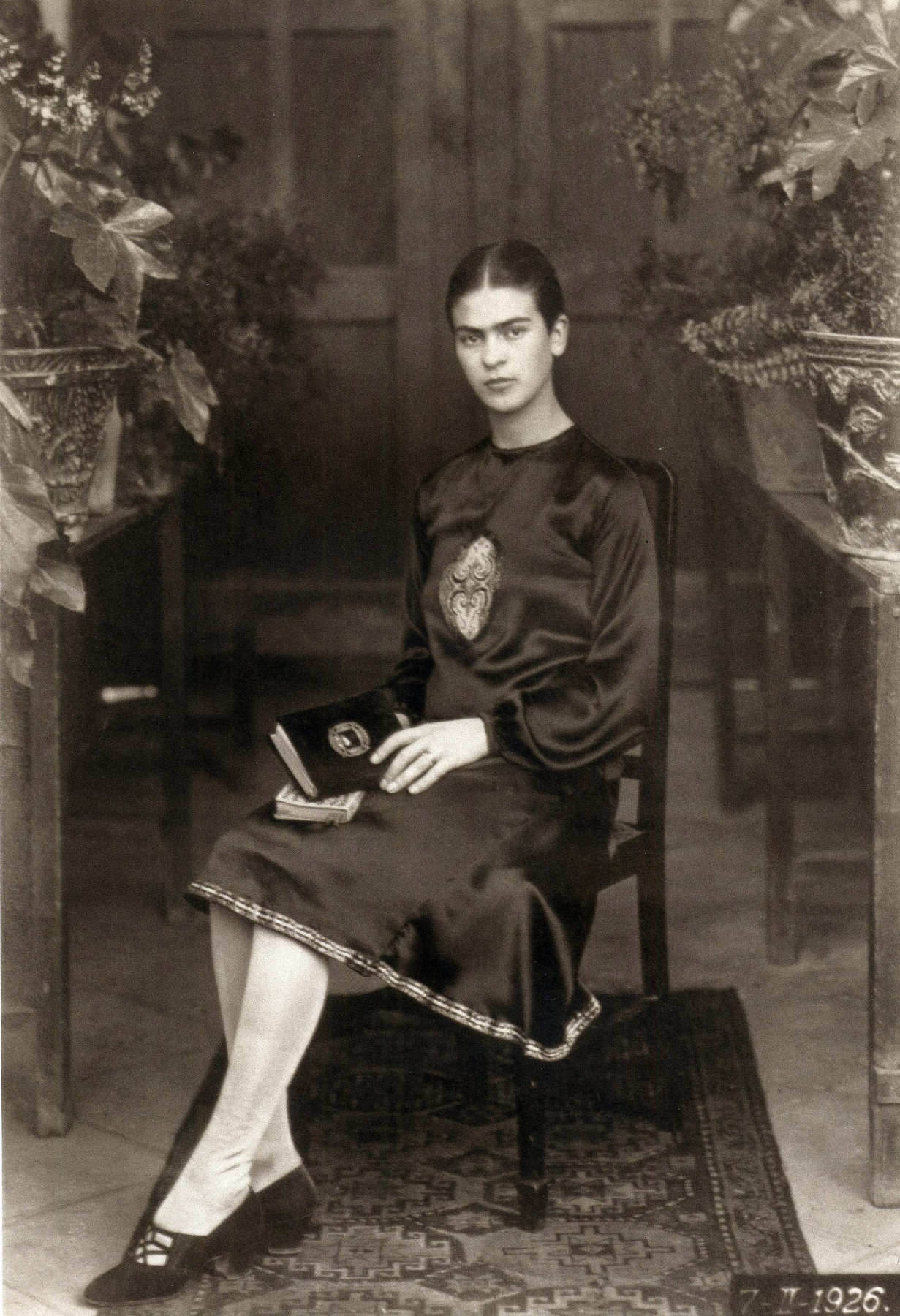
As a teenager Kahlo was gravely injured in a bus accident that broke her body and left her in lifelong pain, enduring many operations. It was while recovering, confined to bed, that she began to paint, using a special easel and a mirror so she could portray herself. Suffering would run through her art ever after.
Kahlo's paintings are unmistakable, with their bold colours, dreamlike imagery, and raw emotional honesty. Often grouped with the surrealists, she rejected the label, insisting she painted not dreams but her own reality. Her work blends personal symbolism with the vivid traditions of Mexican folk art into something wholly her own.
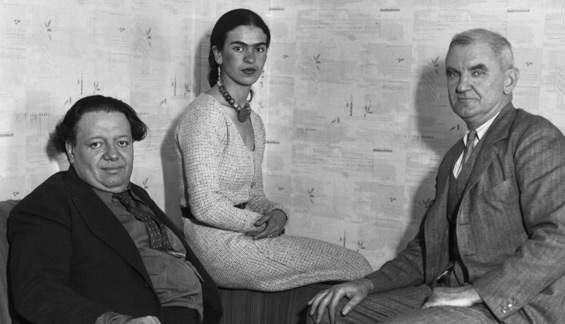
Her turbulent marriage to the famous muralist Diego Rivera was central to her life and art. Full of love, conflict, infidelity, and reconciliation, the relationship between the two artists was passionate and stormy. Rivera was a giant of Mexican art, and their lives and work were deeply intertwined for decades.
Physical suffering and emotional intensity run through much of Kahlo's work. She painted her broken body, her miscarriages, and her grief with startling frankness, transforming private anguish into powerful, universal images. Few artists have so directly turned their own pain into art of such force and beauty.
Kahlo was a proud champion of Mexican culture and identity, embracing traditional dress and folk imagery as expressions of her heritage. She held strong political beliefs and moved in radical circles, and her art and life were bound up with her commitment to her country and its people.
Kahlo gained real recognition only late in her life, long overshadowed by her famous husband, and she died at just forty seven. For years she was remembered more as Rivera's wife than as a major artist in her own right, her work not yet given its due.
In the decades since her death, Kahlo's reputation has soared. Her unflinching self portraits, her distinctive style, and her story of resilience in the face of suffering have made her a global icon of art, feminism, and Mexican heritage, her image known and admired around the world.
