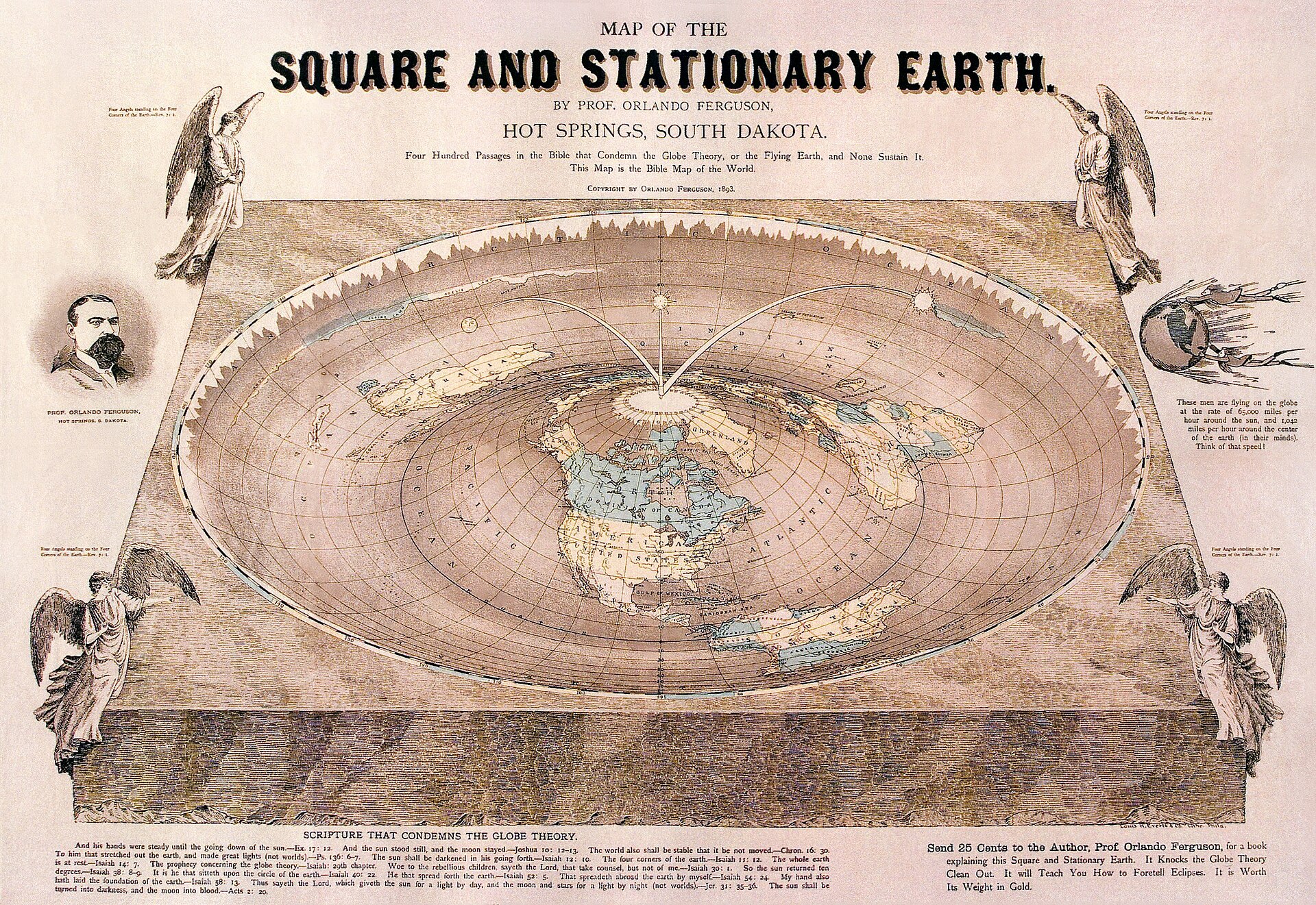
The idea that the Earth is flat is a debunked belief that the planet is a disc or a plane rather than a sphere. It has been contradicted by overwhelming evidence for more than two thousand years, yet a small modern movement continues to promote it, making it one of the clearest examples of how a thoroughly disproven claim can still find believers.
Contrary to a common myth, educated people did not believe in a flat Earth in the Middle Ages. Ancient Greek thinkers had established that the Earth is a sphere as early as the sixth century BC, reasoning from the curved shadow it casts on the Moon during an eclipse and the way ships vanish hull first over the horizon.
By around 240 BC, the scholar Eratosthenes had even measured the Earth's circumference with remarkable accuracy. Knowing that the Sun shone straight down a well in one city at noon while casting a shadow in another, he used the angle of that shadow and the distance between the cities to calculate the size of the whole planet, coming astonishingly close to the modern value with nothing but geometry.
The proofs that the Earth is round are simple, abundant, and accessible to anyone. Ships disappear hull first as they sail away, the Earth casts a round shadow during a lunar eclipse, different constellations are visible from different latitudes, and the time of sunrise shifts steadily as you travel east or west.
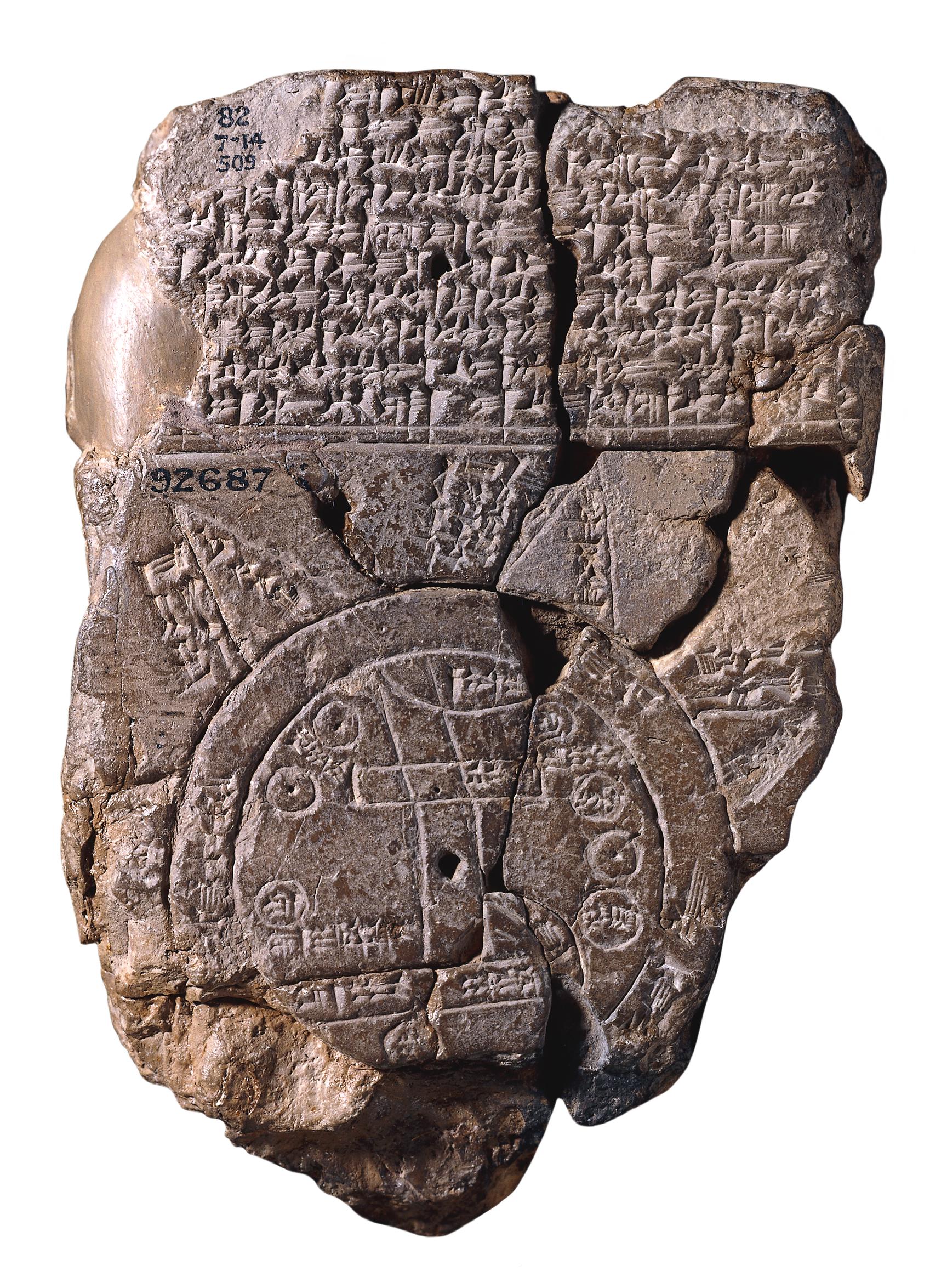
Early maps such as the ancient Babylonian Imago Mundi pictured a flat world because their makers were mapping a local region, not modeling the planet as a whole. A flat map is a useful tool, but it is a projection of a curved surface onto a page, not a claim that the surface itself is flat.
Modern life puts the matter beyond any doubt. Countless photographs taken from high altitude and from space show a plainly spherical planet, and the whole machinery of the modern world depends on that shape. Satellites, global navigation, and intercontinental flight paths are all calculated for a round Earth and would simply not work on a flat one.
Despite all of this, a flat Earth movement persists today, spread largely through social media. It survives not on evidence but on a deep distrust of institutions and a willingness to reject the testimony of science, photography, and direct measurement alike.
Studied as a social phenomenon rather than a scientific one, the flat Earth movement offers a striking lesson in how belief can resist even the most overwhelming proof, and in why simply presenting facts is often not enough to change a mind that distrusts their source.
