Evolution by natural selection is the scientific theory that explains how the diversity of life arose and continues to change. It holds that organisms vary, that some of this variation is inherited, and that individuals whose traits suit their environment tend to survive and reproduce more successfully, so those traits become more common over generations.
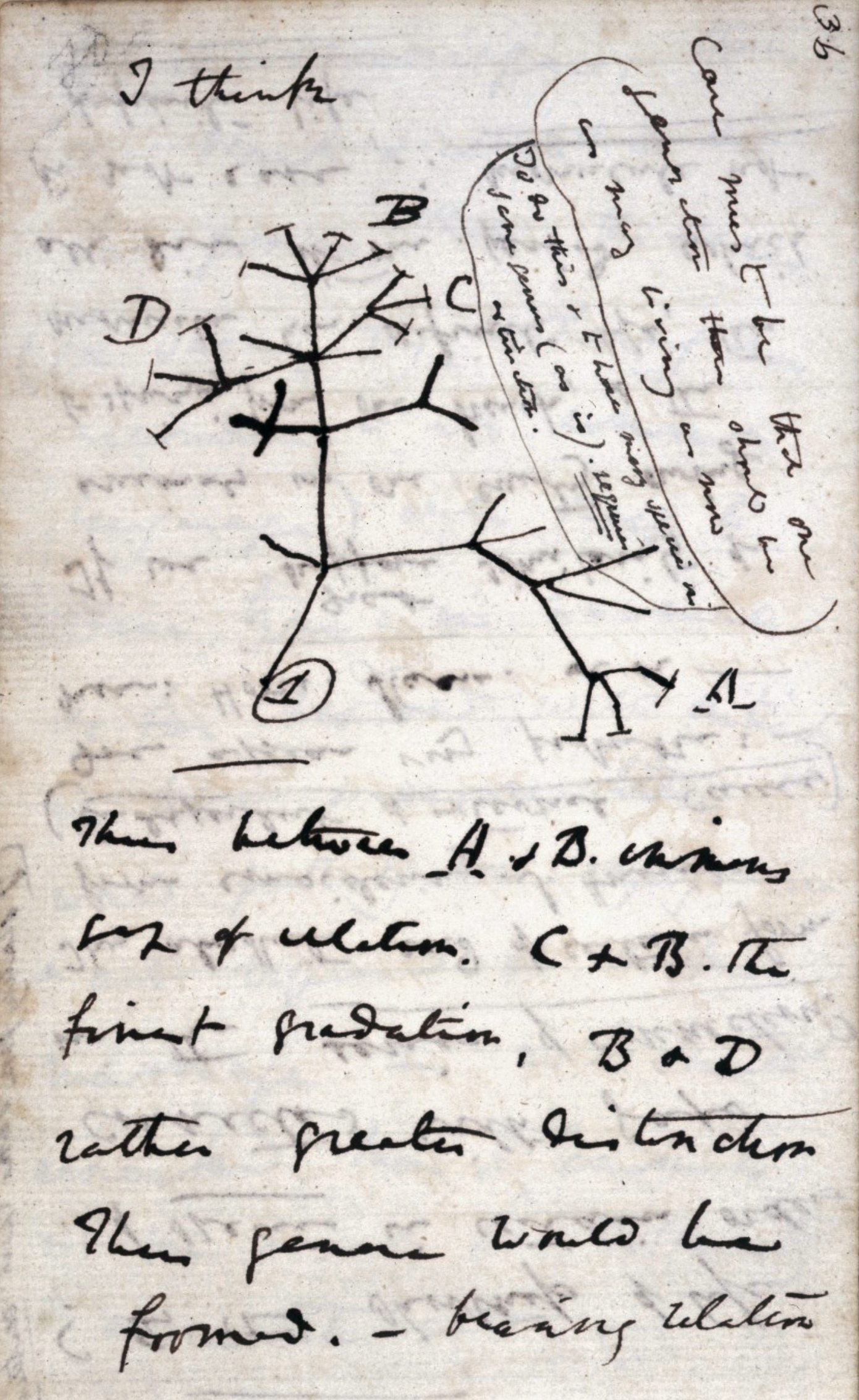
Charles Darwin developed the theory over two decades, drawing on his observations during the voyage of HMS Beagle, and published it in 1859 in *On the Origin of Species*. The naturalist Alfred Russel Wallace arrived at the same insight independently, and the two announced it jointly in 1858. Darwin's early notebooks already sketched life as a branching tree, with all species connected through common ancestors.
The five year voyage of the Beagle, begun in 1831, gave Darwin a wealth of observations that would slowly germinate into his theory. The finches and giant tortoises of the Galápagos Islands, subtly different from one island to the next, suggested that species were not fixed but could change and diverge when isolated, a quietly revolutionary thought.
Natural selection needs only three ingredients: variation among individuals, inheritance of that variation, and differential survival and reproduction. No individual strives to evolve. Instead, the environment quietly filters each generation, and the cumulative effect over vast spans of time produces the appearance of design, from the eye to the wing, without any designer.
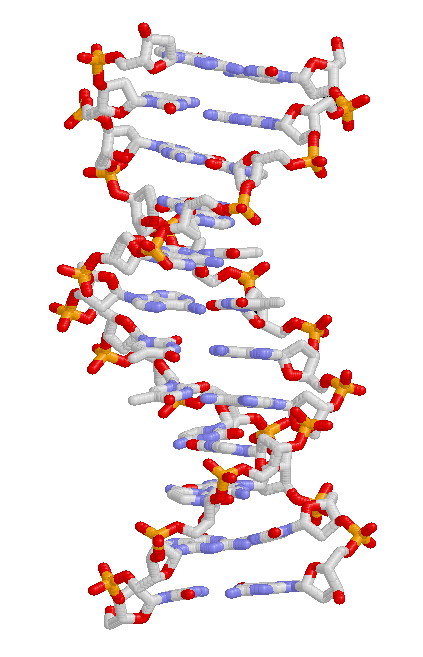
Darwin did not know how traits were inherited. The twentieth century discovery of genes and then of DNA supplied the missing mechanism, and the resulting "modern synthesis" united genetics with natural selection. Today, mutations in DNA are understood to be the ultimate source of the heritable variation that selection acts upon.
Given enough time and isolation, populations of one species can diverge so far that they can no longer interbreed, becoming separate species. Repeated over billions of years, this branching has produced the entire tree of life, on which every living thing, from bacteria to blue whales, is a distant cousin sharing common ancestors.
Evolution is supported by independent lines of evidence that all converge: the fossil record's ordered sequence of forms, the nested pattern of anatomical similarities, the shared genetic code across all living things, and directly observed change such as antibiotic resistance in bacteria and the evolution of pesticide-resistant insects. It is among the most rigorously tested theories in all of science.
Evolution is not only a story about the deep past; it is happening now and can be watched directly. The rapid emergence of drug resistant bacteria, the changing beaks of Galápagos finches tracked across single decades, and the breeding of crops and animals by humans all show natural and artificial selection reshaping living things within a human lifetime.
