Endosymbiotic theory explains the origin of the complex cells that make up plants, animals, fungi, and other higher organisms. It proposes that key parts of these cells, especially the mitochondria and chloroplasts, were once free living bacteria that came to live inside a larger host cell.
Life is built from two basic kinds of cell. Simple cells, called prokaryotes, are small and lack a nucleus; bacteria are the great example. Complex cells, called eukaryotes, are larger and contain a nucleus and many specialized internal structures. How the simple gave rise to the complex is one of biology's deepest questions.
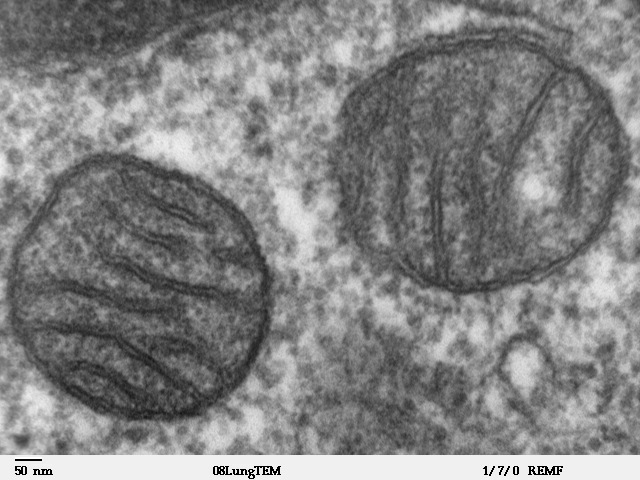
Inside complex cells are tiny structures that do vital jobs. Mitochondria release the energy that powers the cell, and in plants, chloroplasts capture sunlight to make food. These two structures are unusual: they look and behave remarkably like bacteria living inside the cell.
Mitochondria and chloroplasts carry their own DNA, separate from the cell's main genome, and they reproduce by dividing on their own, just as bacteria do. They are surrounded by double membranes, as if one cell had swallowed another. These clues point to a startling origin.
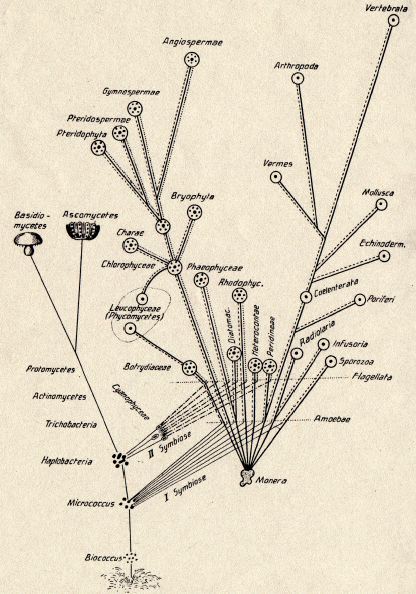
Endosymbiotic theory proposes that, long ago, a large cell engulfed certain free living bacteria but, instead of digesting them, kept them alive. Over countless generations the engulfed bacteria and the host came to depend on one another completely, until the bacteria became permanent parts of the cell.
The idea was first suggested in the early twentieth century but was largely ignored or dismissed for decades. It was forcefully revived and developed in the 1960s by the biologist Lynn Margulis, who met fierce resistance before the evidence gradually won the scientific community over.
The decisive evidence came from genetics. When scientists read the genes inside mitochondria and chloroplasts, they found them to be bacterial in character, distinct from the genes in the cell's nucleus and closely related to particular groups of living bacteria. The structures were, genetically, the descendants of captured microbes.
Endosymbiotic theory explains one of the most important transitions in the history of life: how simple cells gave rise to the complex cells from which all plants, animals, and fungi evolved. This single event, a cell capturing a partner, may have unlocked the path to all large, complex life.
The theory carries a deeper lesson. It reveals that cooperation between organisms, not just competition, has been a powerful creative force in evolution. The merging of two kinds of life into one new whole reshaped how scientists think about the tree of life, and it remains a settled cornerstone of modern biology.
