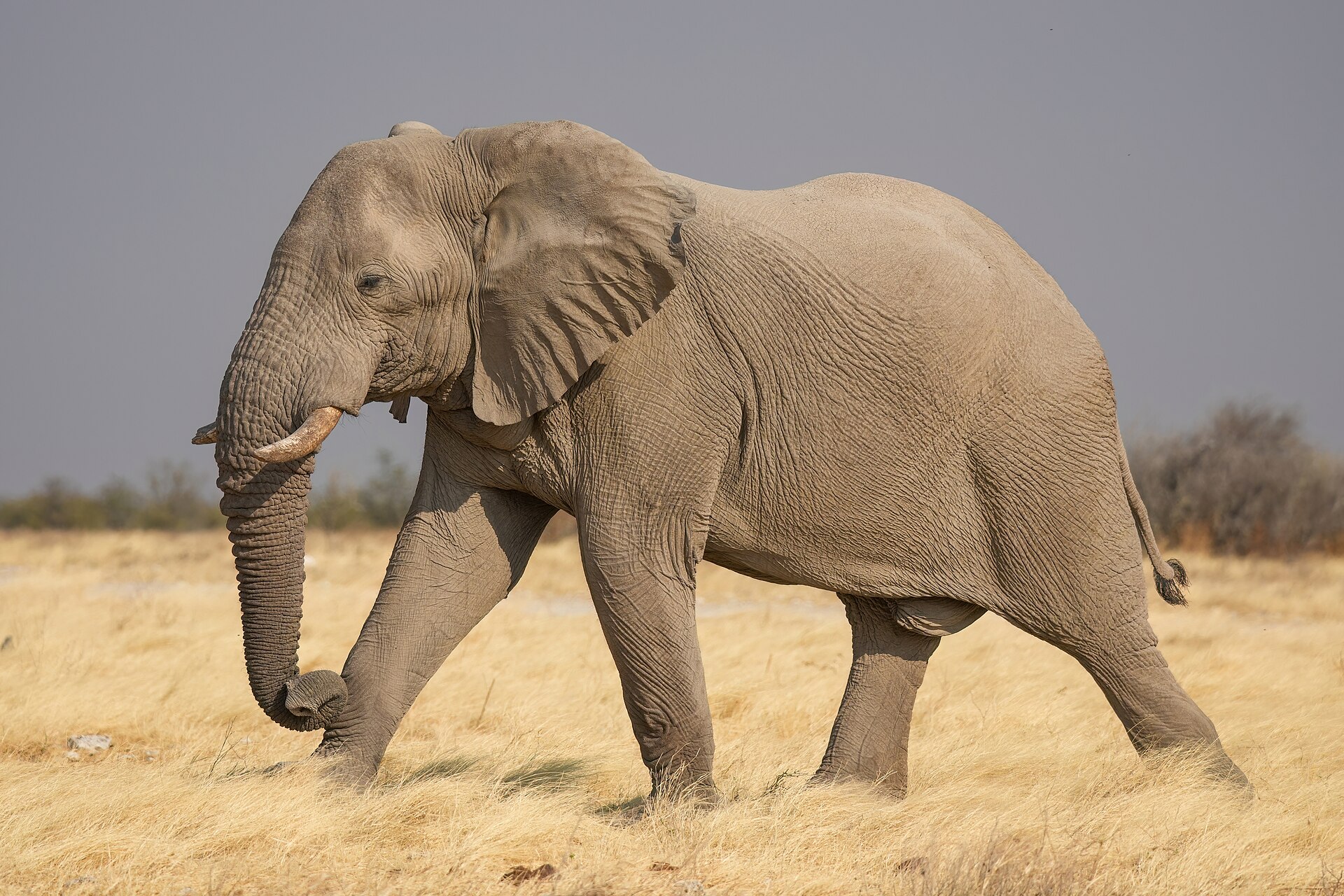
Elephants are the largest living land animals, instantly recognisable by their long trunks, fan-like ears, and curving tusks. Three species survive today: the African bush elephant, the smaller African forest elephant, and the Asian elephant. All are intelligent, long-lived, and deeply social, with family bonds that rival those of any animal on Earth.
An adult African bush elephant can stand over three metres at the shoulder and weigh six tonnes or more. Its most extraordinary feature is the trunk: a fusion of nose and upper lip containing tens of thousands of muscles, sensitive and strong enough to uproot a tree or pick up a single blade of grass, and used for breathing, smelling, drinking, trumpeting, and touch. The large ears, especially in African elephants, radiate heat and help keep the animal cool.
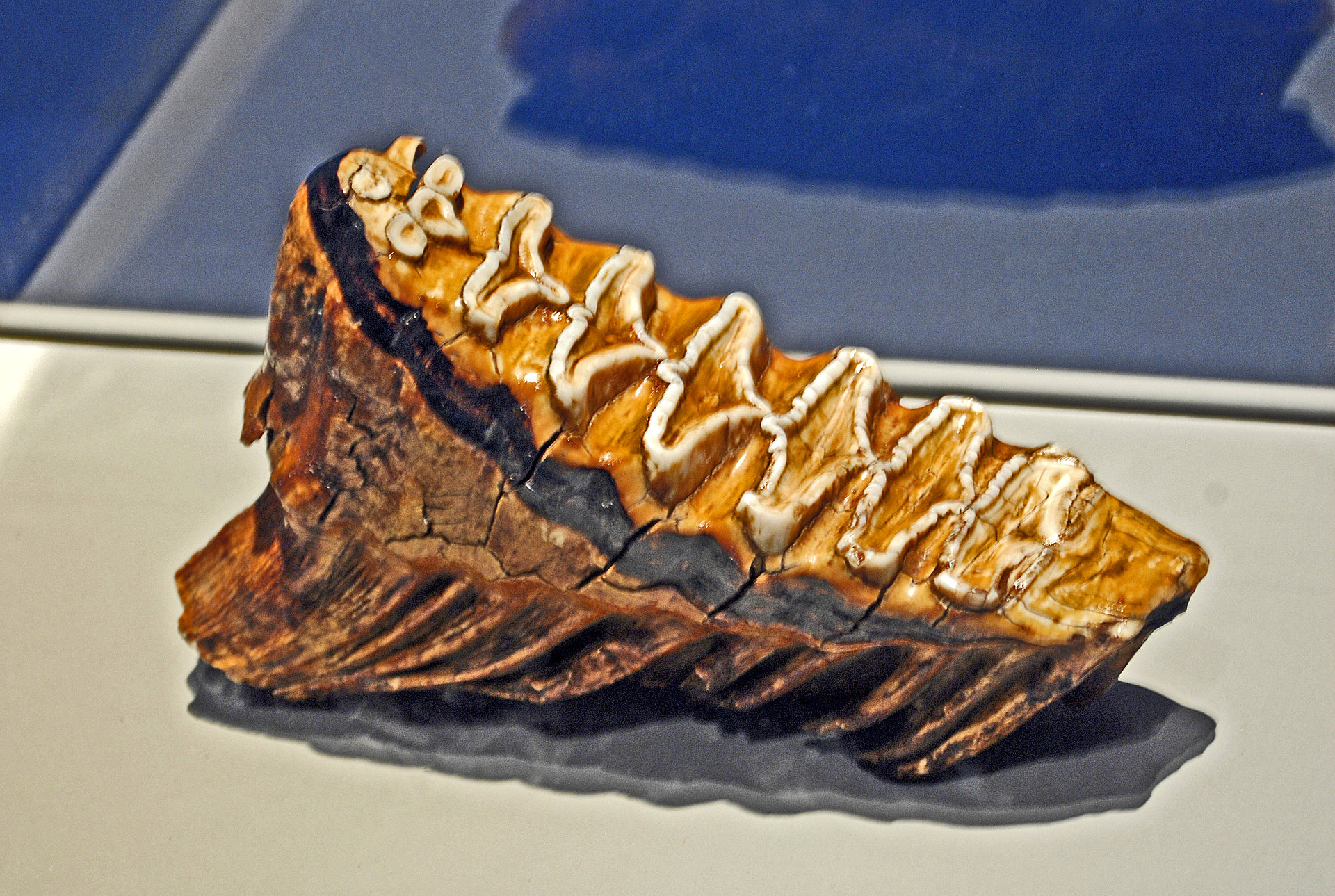
The tusks are enormously elongated incisor teeth, used for digging, stripping bark, and fighting, and they never stop growing. An elephant's cheek teeth are just as remarkable: it goes through six sets of huge grinding molars in a lifetime, each worn down by years of chewing rough vegetation and replaced from behind, and when the final set is gone in old age the animal can no longer feed properly.
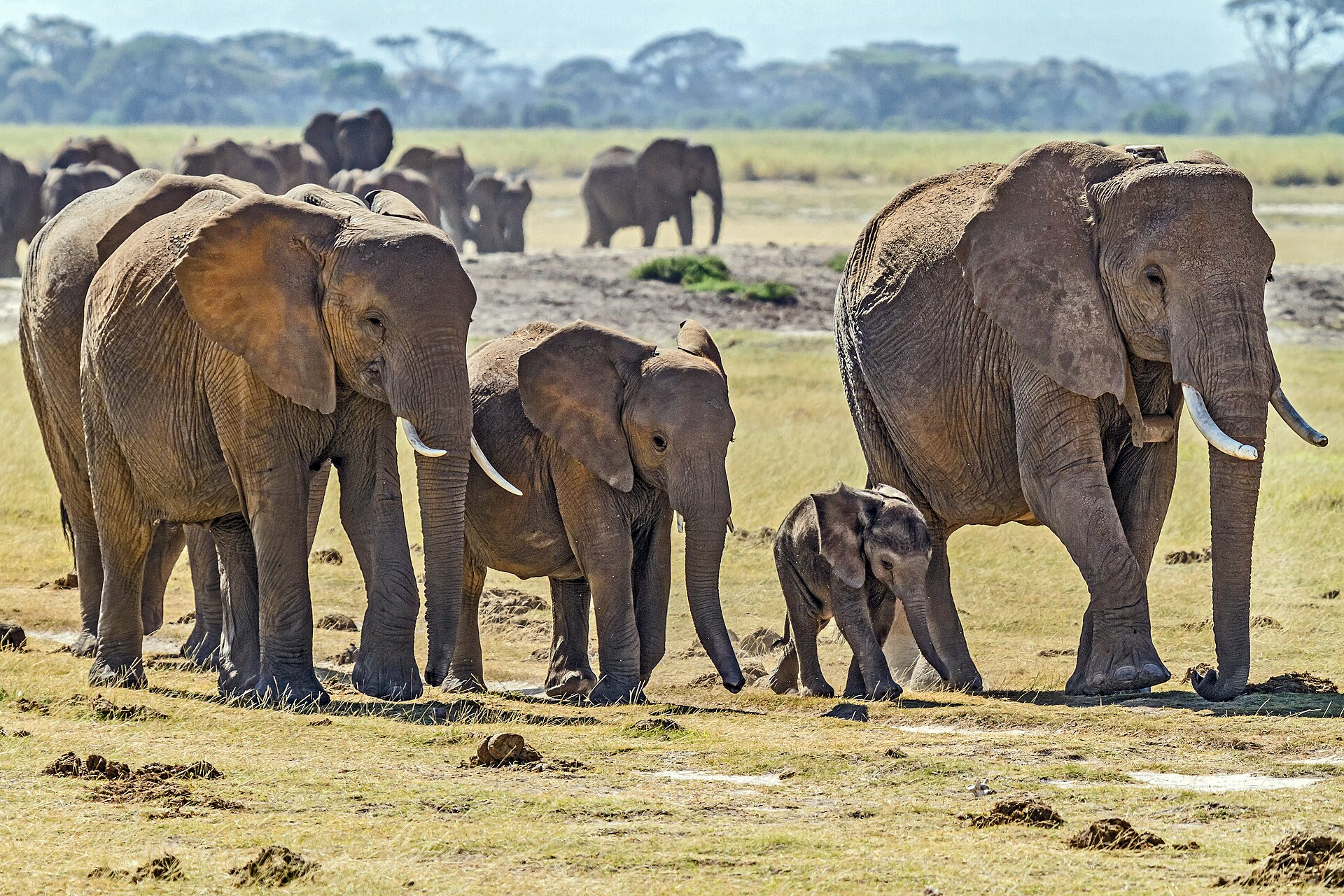
Elephants live in tight-knit family groups of related females and their young, led by the oldest and most experienced female, the matriarch, whose memory of distant water and food can carry the herd through drought. Adult males generally live apart, alone or in loose bachelor groups.
Elephants are among the most intelligent of animals: they use tools, show evidence of self-awareness, cooperate to solve problems, and display behaviours that look strikingly like grief, lingering over and even returning to the bones of dead companions. They communicate over long distances with deep rumbles, many too low for humans to hear, that travel through the air and even the ground.
Elephants shape the landscapes they inhabit. By knocking down trees, digging for water, and spreading seeds in their dung across great distances, they maintain the open savannas and forest clearings on which countless other species depend, earning them the title of "ecosystem engineers." A single elephant can disperse seeds many kilometres from the parent plant.
For all their power, elephants are in trouble. They have been hunted relentlessly for their ivory tusks, and although the international ivory trade is now banned, poaching continues. Just as serious is the loss and fragmentation of their habitat, which brings elephants into increasing conflict with farmers and villages.
