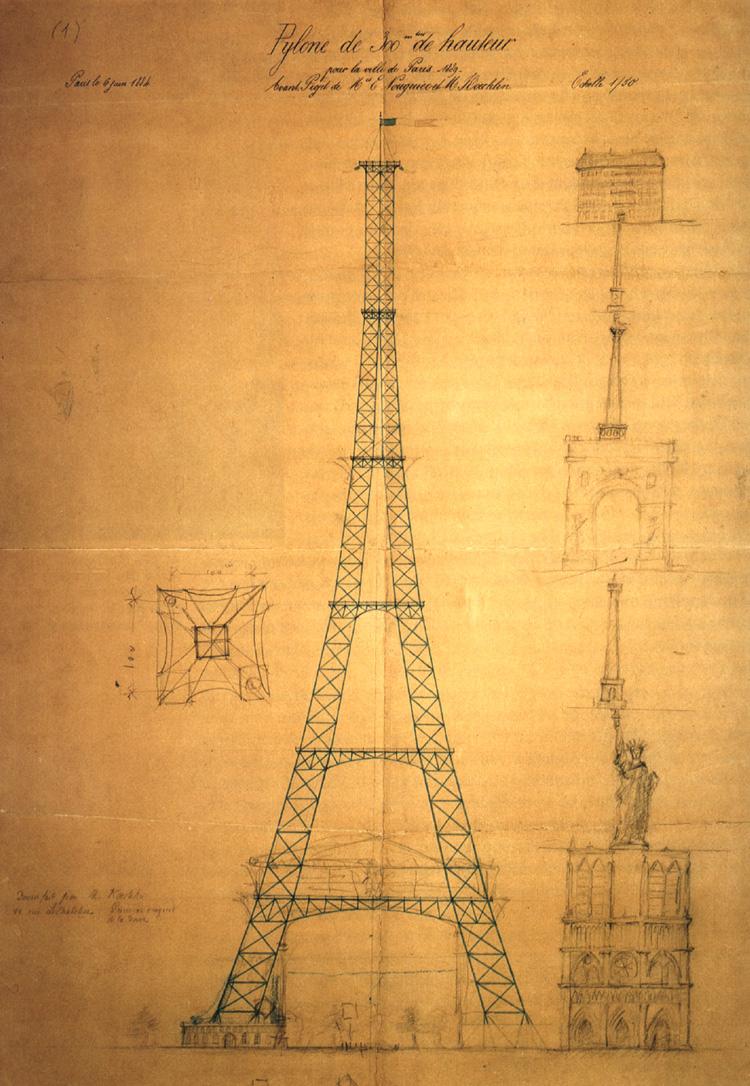
The Eiffel Tower is a wrought iron lattice tower in Paris, France, and one of the most recognized structures in the world. Standing about 330 metres tall, it was the tallest human made structure on Earth for more than forty years after its completion, and it has become an enduring emblem of the city and the nation.
The tower was designed by engineers at the company of Gustave Eiffel and built between 1887 and 1889 as the centrepiece of the 1889 World's Fair, held to mark the centenary of the French Revolution. The original concept came from two of Eiffel's engineers, Maurice Koechlin and Émile Nouguier, and was intended from the start as a temporary structure, meant to stand for only twenty years.
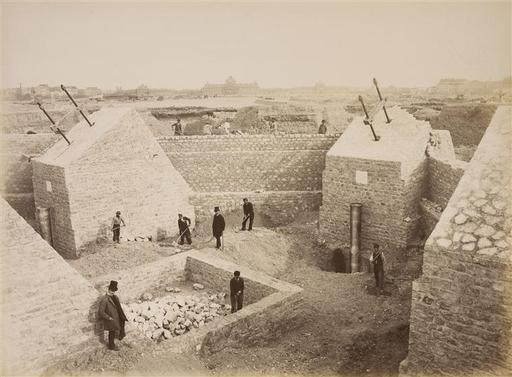
Before the iron could rise, enormous foundations had to be sunk to carry the tower's weight, including pits dug below the level of the nearby River Seine using pressurized chambers called caissons. This careful groundwork, far less famous than the tower above, was essential to keeping the slender structure stable.
Assembled from more than eighteen thousand individual iron pieces joined by over two million rivets, the tower rose with a precision that astonished observers. Its open lattice design allows wind to pass through rather than push against it, a key to its stability, and the whole structure was raised in a little over two years by a workforce that never exceeded a few hundred.
At first the tower was sharply criticized. A group of prominent artists and writers signed a public protest calling it a monstrosity that would disfigure Paris.
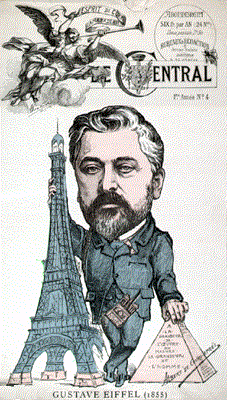
Public opinion soon turned, helped by the tower's usefulness as a platform for radio and later television transmission, which saved it from demolition. It became a beloved symbol of the city and of France itself.
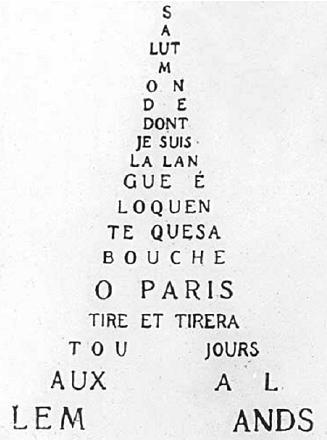
Far from disfiguring the city, the tower became a muse. It appeared in paintings, photographs, and poems, including a famous calligram by Guillaume Apollinaire whose words are arranged in the shape of the tower itself, turning the structure into a piece of writing.
Today the Eiffel Tower draws millions of visitors every year and has inspired countless imitations and tributes around the world. What began as a temporary exhibition piece, doubted by many, has become one of the most photographed and instantly recognizable landmarks on Earth, glittering each night above Paris.
