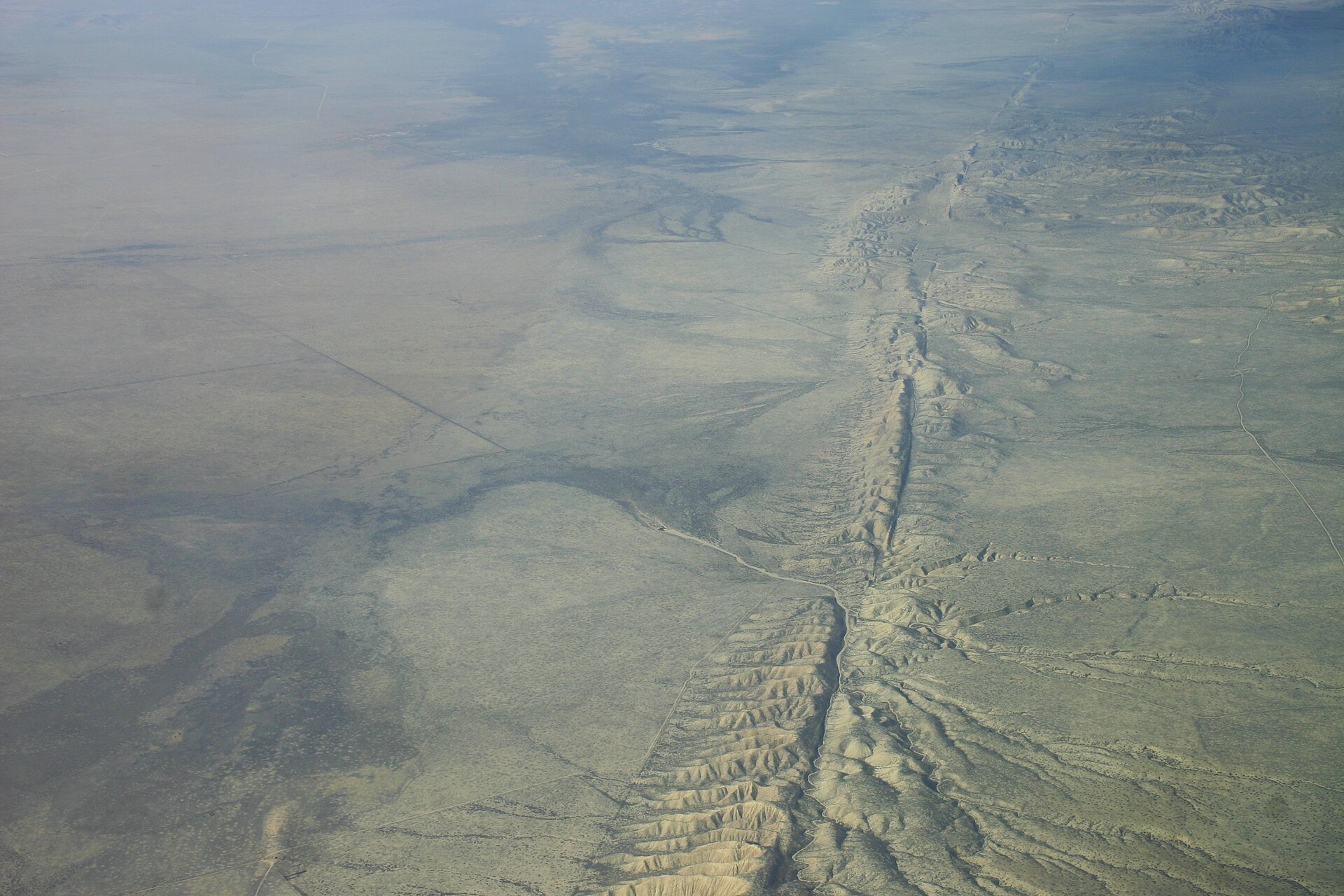
An earthquake is a sudden shaking of the ground caused by the release of energy deep within the Earth. Most are too faint to feel, but the largest are among the most destructive of all natural disasters, capable of levelling cities and triggering landslides and tsunamis in moments.
The Earth's rigid outer shell is broken into tectonic plates that grind slowly past, under, and against one another. Where their edges lock together, stress builds up in the rock over years or centuries until it suddenly gives way, snapping along a fracture called a fault and releasing the stored energy as seismic waves that radiate outward and shake the surface. The point underground where the rupture begins is the focus, and the spot on the surface directly above it is the epicentre.
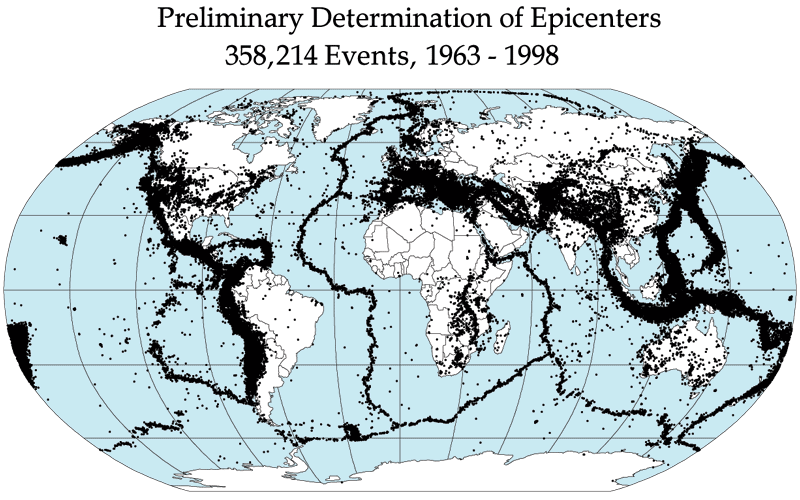
Because earthquakes cluster along the edges of the tectonic plates, a world map of their epicentres traces those boundaries with remarkable clarity, outlining each plate as a jagged seam of seismic activity that rings the Pacific and runs down the middle of the oceans.
Seismometers record the waves an earthquake sends through the Earth, and from these readings scientists calculate its magnitude, a measure of the energy released. The scale is logarithmic, so each whole step up represents a roughly thirty-fold increase in energy: a magnitude 7 quake releases vastly more energy than a magnitude 6, and a great quake can be thousands of times more powerful than one merely strong enough to feel.
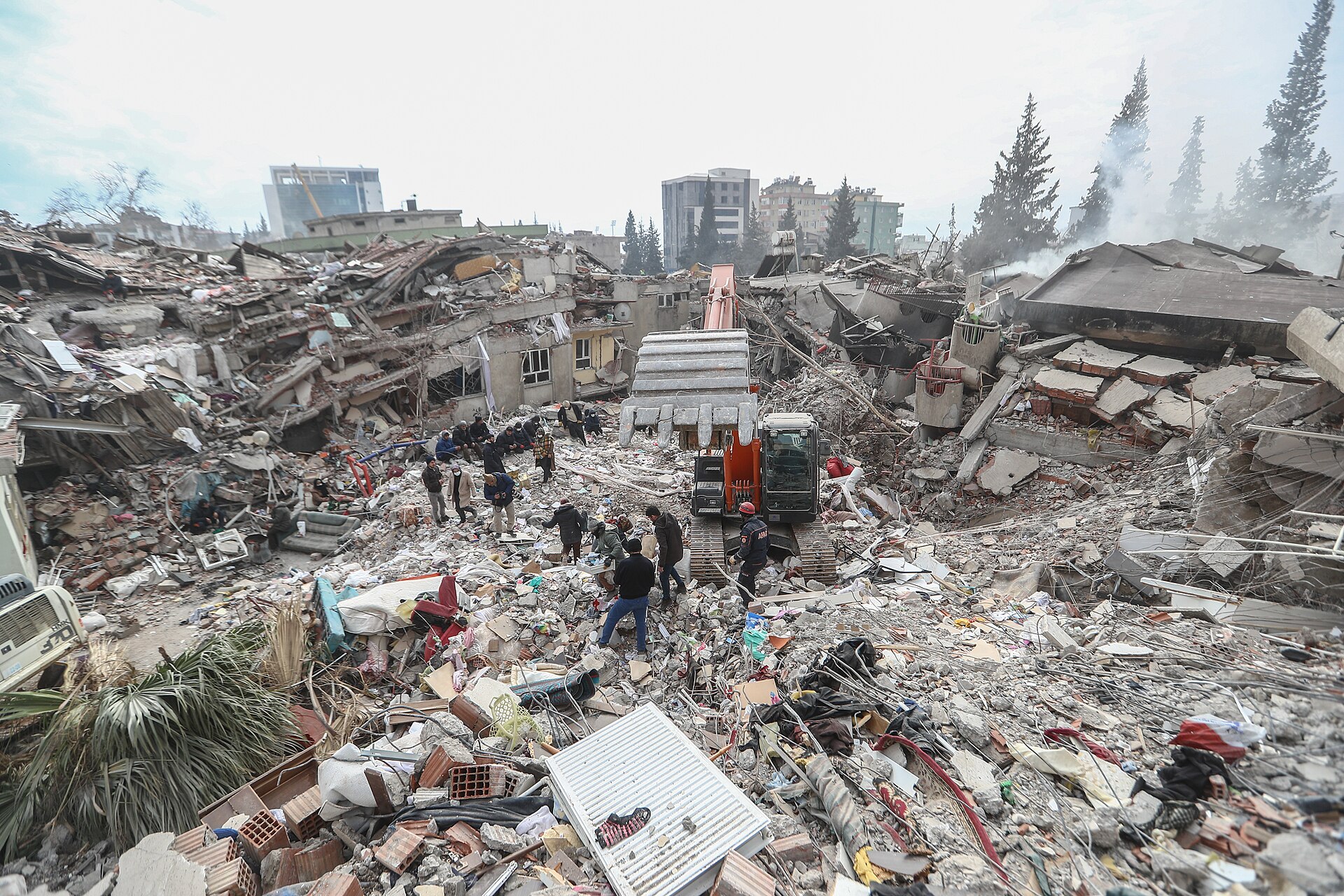
Earthquakes themselves rarely kill people directly; most casualties come from collapsing buildings, fires, landslides, and tsunamis set off by the shaking. The damage depends heavily on how close and shallow the quake is, the local soil, and, above all, how well structures are built.
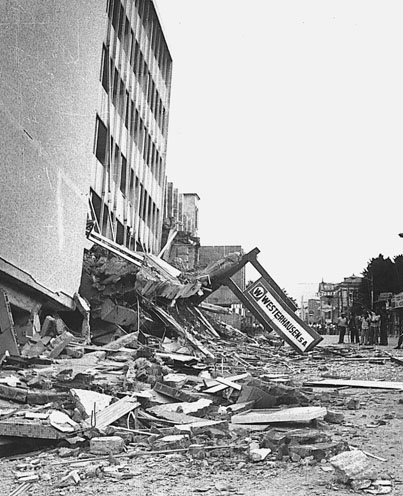
This is why earthquake-prone regions invest so much in engineering buildings to flex and withstand shaking, and in drills that teach people how to respond. The contrast is stark: a strong quake may leave well-built cities shaken but standing, while a similar quake elsewhere can flatten poorly built towns and kill tens of thousands.
Despite intense research, scientists cannot yet predict exactly when and where a specific earthquake will strike. What they can do is map the faults, estimate the long-term probability of quakes in a region, and build early-warning systems that detect the first, faster seismic waves and send alerts seconds before the stronger shaking arrives, precious time to take cover or halt trains and machinery.
Over geological time, the same forces that cause earthquakes also build the world. The slow grinding of the plates that occasionally snaps into a quake is, across millions of years, what raises mountain ranges, opens ocean basins, and shapes the very face of the Earth.
