Time travel, journeying into the past or the future, is a staple of science fiction, but is it actually possible? The surprising answer from physics is that travel to the future is real, while travel to the past remains deeply uncertain and probably impossible.
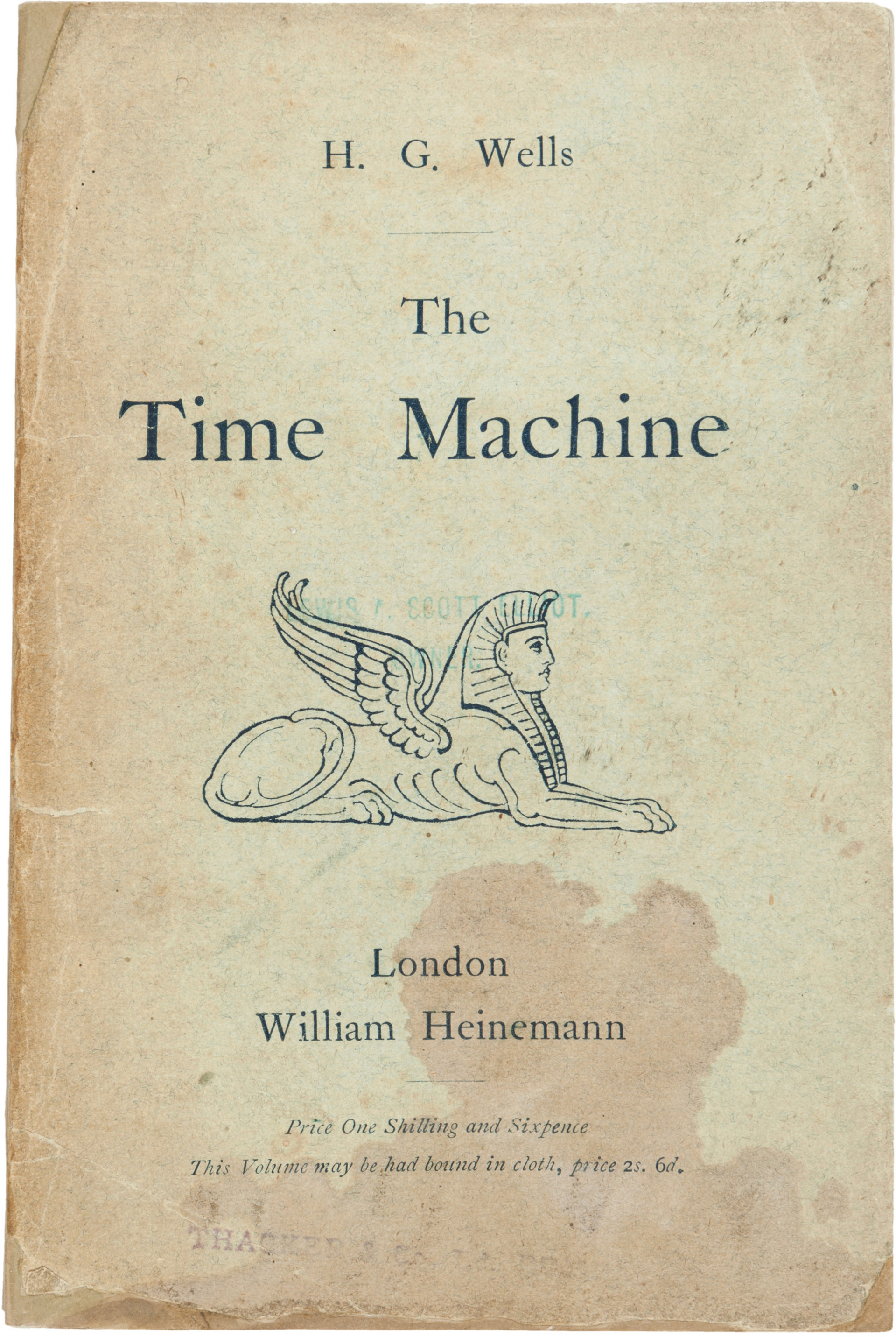
The idea of travelling through time has fascinated humanity for centuries, woven into myths, legends, and famous tales like H. G. Wells's The Time Machine. The longing to revisit the past or glimpse the future is deeply human, and it has inspired countless stories, even as it raises profound questions for science.

Travelling forward in time, surprisingly, is genuinely possible, and it has actually been measured. Einstein's theory of relativity shows that time is not absolute but can run at different rates depending on motion and gravity, which opens a real, if modest, door to the future.
Relativity reveals that time runs slightly slower for objects moving very fast or sitting in strong gravity. An astronaut who travels at high speed ages a tiny bit less than people left on Earth, in effect arriving slightly in their future when they return. The effect is real but normally far too small to notice.
This time dilation is not mere theory; it has been confirmed by experiment. Ultra precise clocks flown on aircraft and held in orbit run measurably differently from clocks on the ground, exactly as relativity predicts. The satellites of navigation systems must even correct for it. Future travel, in tiny doses, is established physics.
Travelling into the past is a far deeper puzzle. Some solutions to the equations of relativity seem to permit it, through exotic possibilities such as wormholes, shortcuts through spacetime, or vast rotating structures. On paper, the mathematics does not flatly forbid journeys backward in time.
But these theoretical routes to the past would require conditions that may not exist in nature, such as strange forms of matter with negative energy, and that we have no idea how to create. The gulf between what the equations might allow and what could ever actually be built is immense, and perhaps unbridgeable.
Travel to the past also raises baffling paradoxes. The most famous asks what would happen if you went back and prevented your own birth: if you were never born, how could you have travelled back to prevent it? Such contradictions suggest that backward time travel, if it is possible at all, must somehow avoid creating them.
Some physicists suspect that the laws of nature simply forbid such paradoxes, perhaps ruling out past travel entirely, while others keep exploring whether it might be possible in principle. For now, journeying to the future is established physics, while reaching the past remains a genuinely open, fascinating, and deeply uncertain question.
