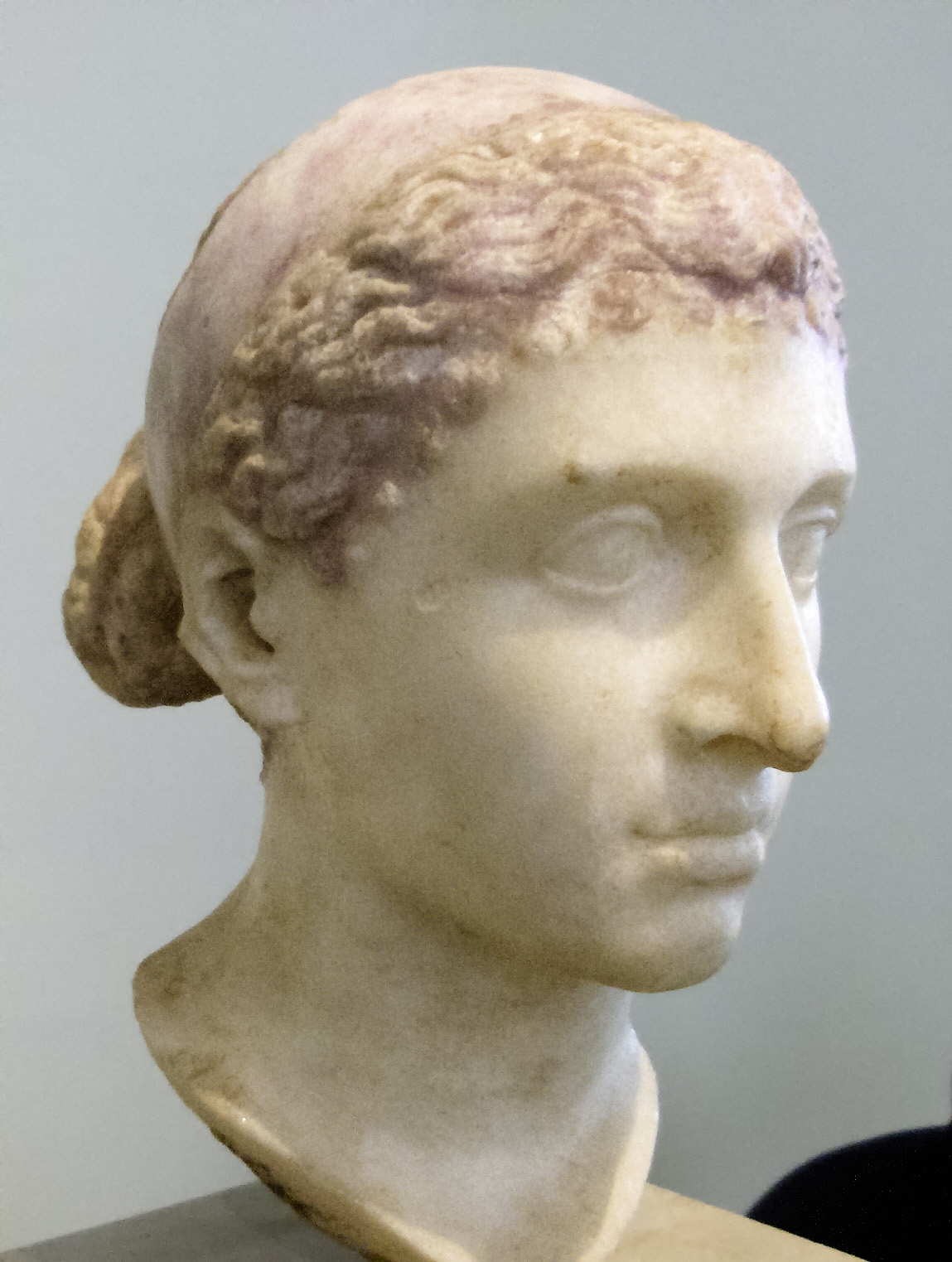
Cleopatra (69 to 30 BC) was the last active ruler of ancient Egypt, a shrewd and highly educated queen whose alliances with the most powerful men of Rome made her one of the most famous women in history.
Cleopatra VII belonged to the Ptolemaic dynasty, descendants of a Greek general of Alexander the Great who had ruled Egypt for nearly three centuries. By her time the dynasty was weakened by feuds and increasingly under the shadow of Rome, and she would be the last of her line to hold real power.
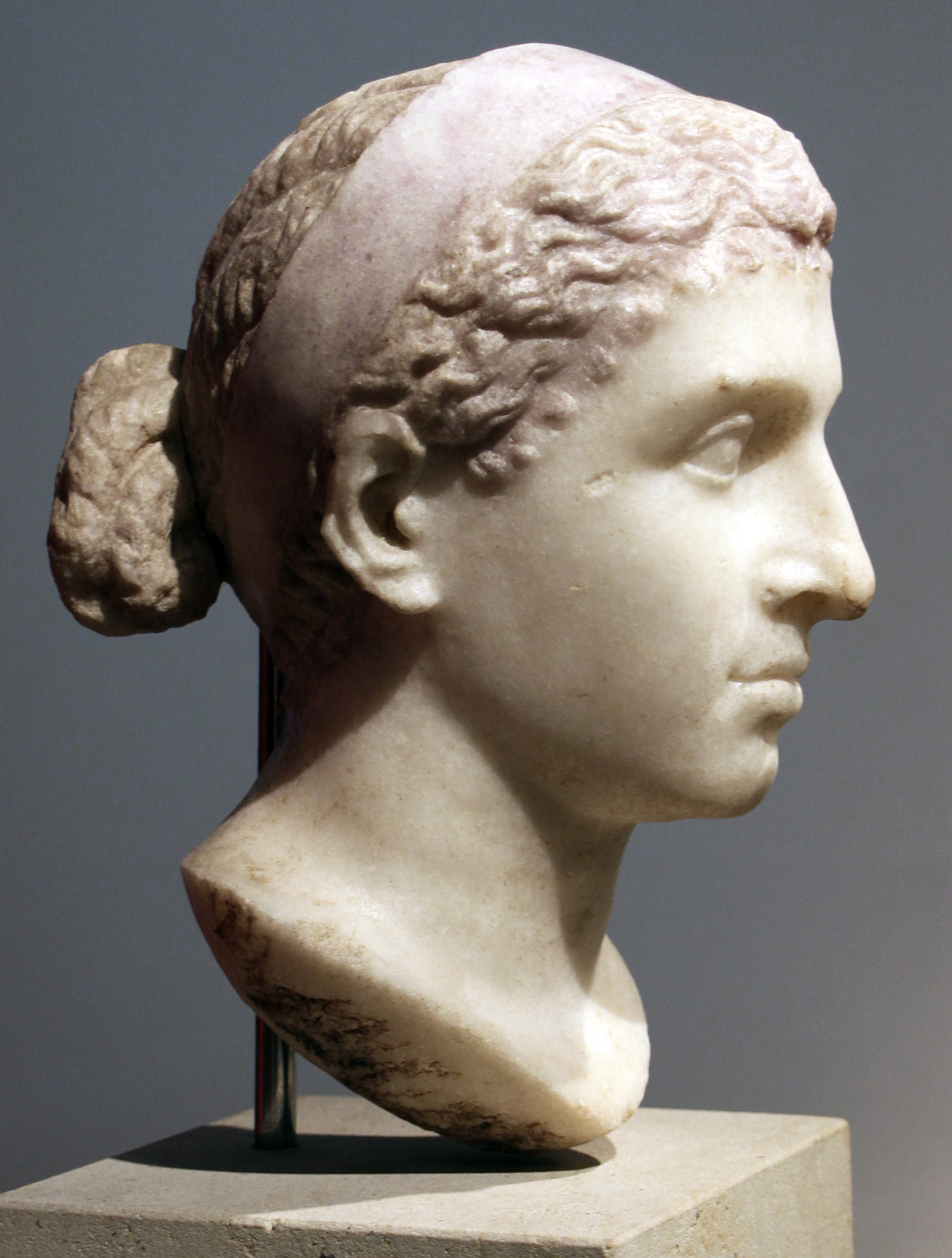
Coming to the throne as a young woman, Cleopatra was intelligent, ambitious, and politically gifted. She was famously well educated, reportedly speaking many languages, and was the first of her Greek dynasty to learn the Egyptian language of the people she ruled, presenting herself as a true queen of Egypt.
Cleopatra ruled a kingdom that was rich, especially in grain, but politically fragile and menaced by the growing power of Rome. To preserve Egypt's independence and her own throne, she needed powerful friends, and she pursued that goal with daring and skill, binding her fate to Rome's most powerful men.
Cleopatra allied herself with Julius Caesar, the most powerful Roman of his day, who helped secure her hold on the throne against rivals. The relationship was both personal and political; she bore him a son, and travelled to Rome itself, where her presence caused a sensation.
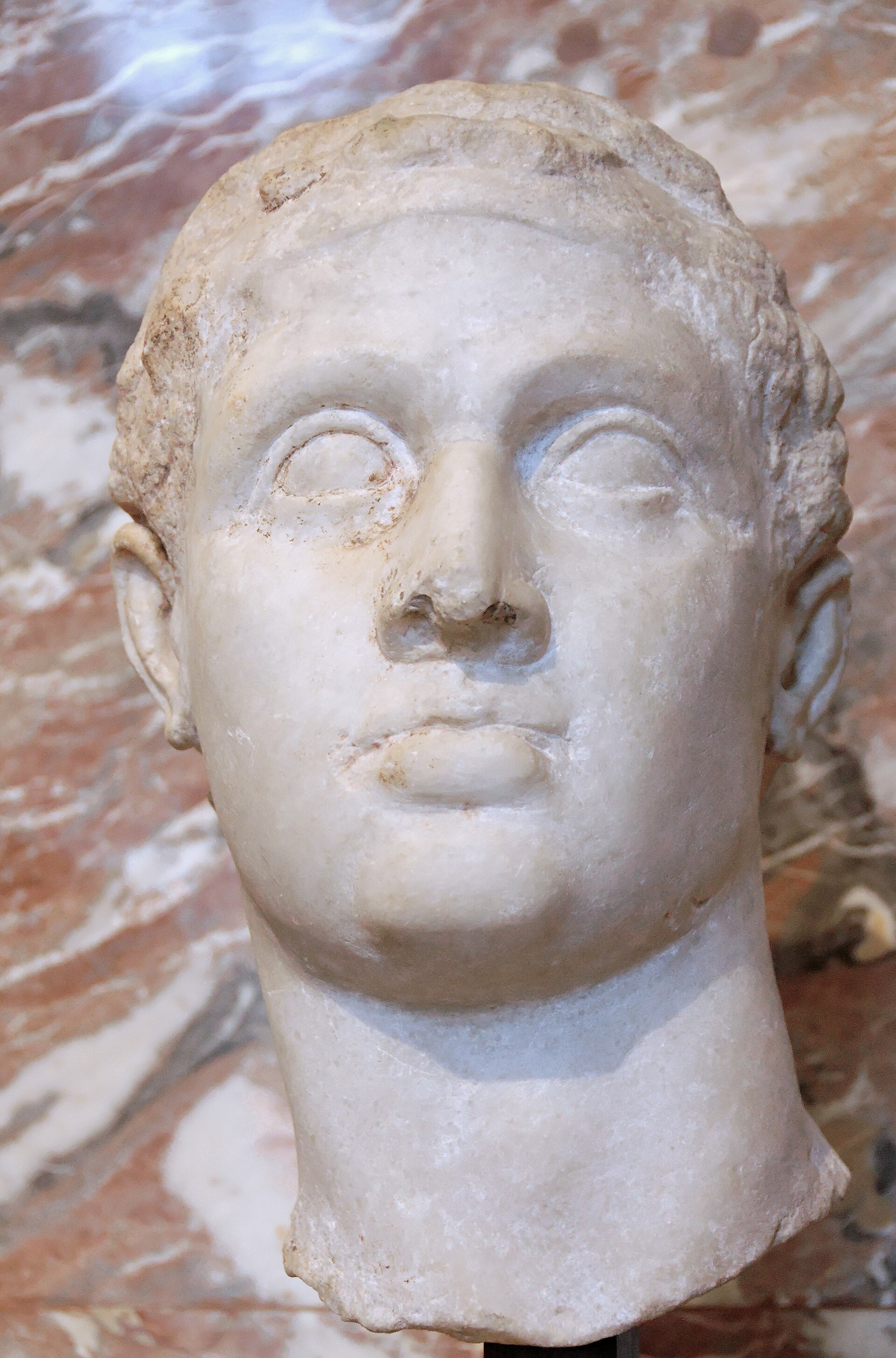
After Caesar's assassination, Cleopatra allied with another leading Roman, the general Mark Antony, with whom she had three children. Together they formed a powerful partnership in the eastern Mediterranean, pooling their resources and ambitions against Antony's rival for control of the Roman world.
Even in her own time, Cleopatra was the subject of legend, portrayed by her Roman enemies as a dangerous seductress who ensnared great men. The truth was more complex: she was above all a capable ruler defending her kingdom, but the romantic legend has often overshadowed the shrewd politician.
The partnership of Cleopatra and Antony was finally crushed by Antony's rival Octavian, the future emperor Augustus, at the great naval Battle of Actium in 31 BC. Their fleets were defeated, and with the battle went their hopes of dominating Rome and preserving an independent Egypt.
With their cause lost and Octavian's forces closing in, both Antony and then Cleopatra took their own lives in 30 BC. Tradition holds that Cleopatra died from the bite of a venomous snake, the asp, a dramatic end fitting her legend, though the exact manner of her death is uncertain.
With Cleopatra's death, Egypt's long independence ended and it became a province of Rome. Her dramatic life, her intelligence, and her romances have inspired plays, paintings, and films ever since, making her one of the most enduring and fascinating figures of the ancient world.
