A black hole is a region of space where gravity is so intense that nothing, not even light, can escape once it passes a certain boundary. They are among the strangest predictions of Einstein's theory of general relativity, and after decades as purely theoretical objects they are now directly observed and even photographed.
General relativity describes gravity not as a force but as the curvature of spacetime by mass. Concentrate enough mass into a small enough volume and that curvature becomes extreme: spacetime folds in on itself, and there forms an event horizon, the point of no return. Anything that crosses the horizon, including light, is trapped forever.
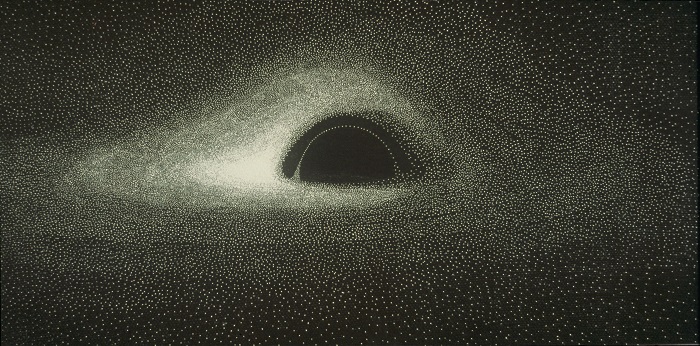
At the centre, theory predicts a singularity, a point of effectively infinite density where the known laws of physics break down. The black hole's only measurable properties from outside are its mass, its spin, and its electric charge, a striking simplicity captured in the phrase that "black holes have no hair." Everything else about whatever fell in is lost from view.
Most black holes form when a massive star runs out of fuel and its core collapses under its own weight, an event often marked by a supernova. These stellar-mass black holes are a few to a few dozen times the mass of the Sun. At the other extreme are supermassive black holes, millions to billions of times the Sun's mass, which sit at the centres of galaxies, including our own Milky Way, whose central black hole is called Sagittarius A*.
Because black holes emit no light, they are detected by their effects on their surroundings: the orbits of nearby stars, the X-rays from superheated gas spiralling inward, and the gravitational waves released when two black holes collide, first detected in 2015.
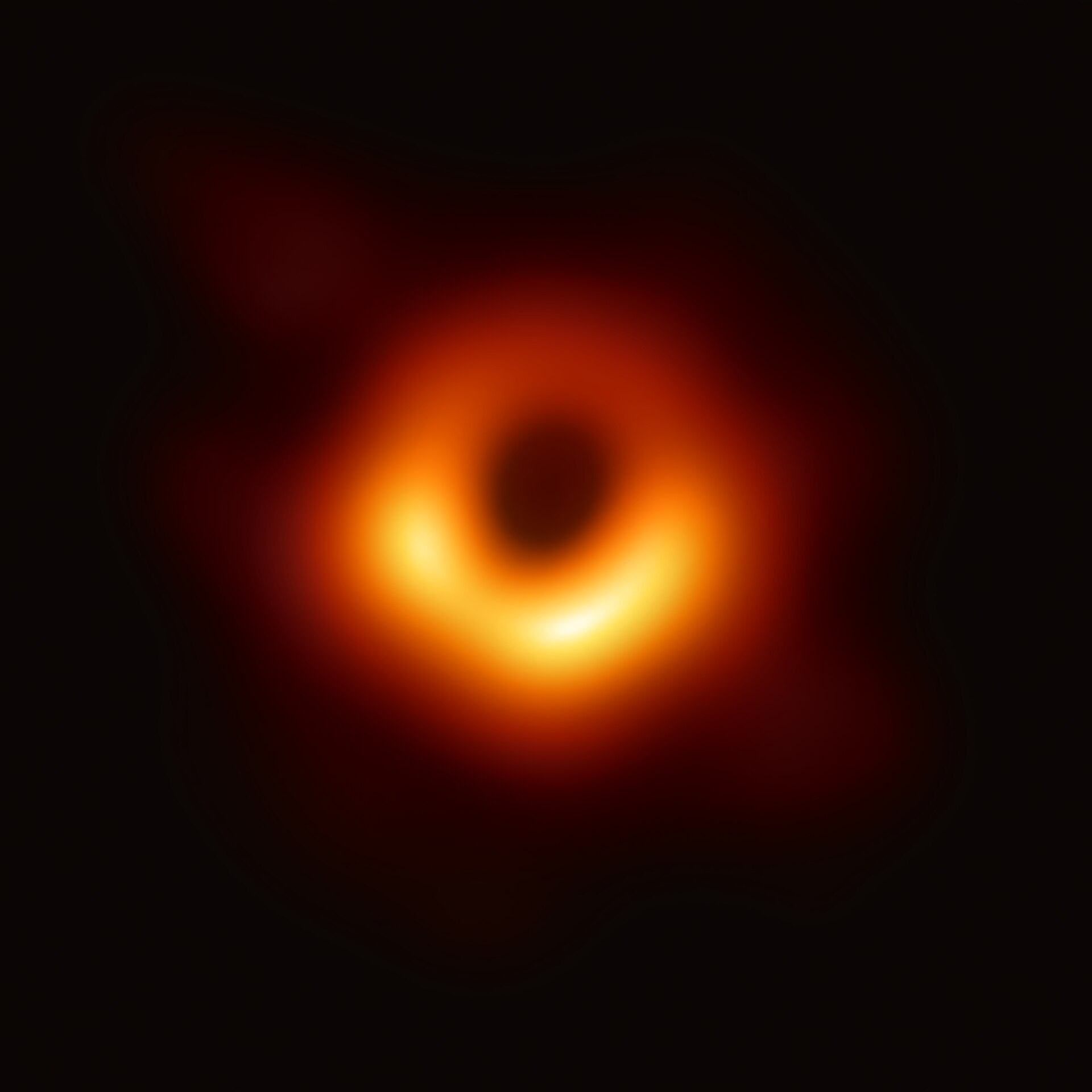
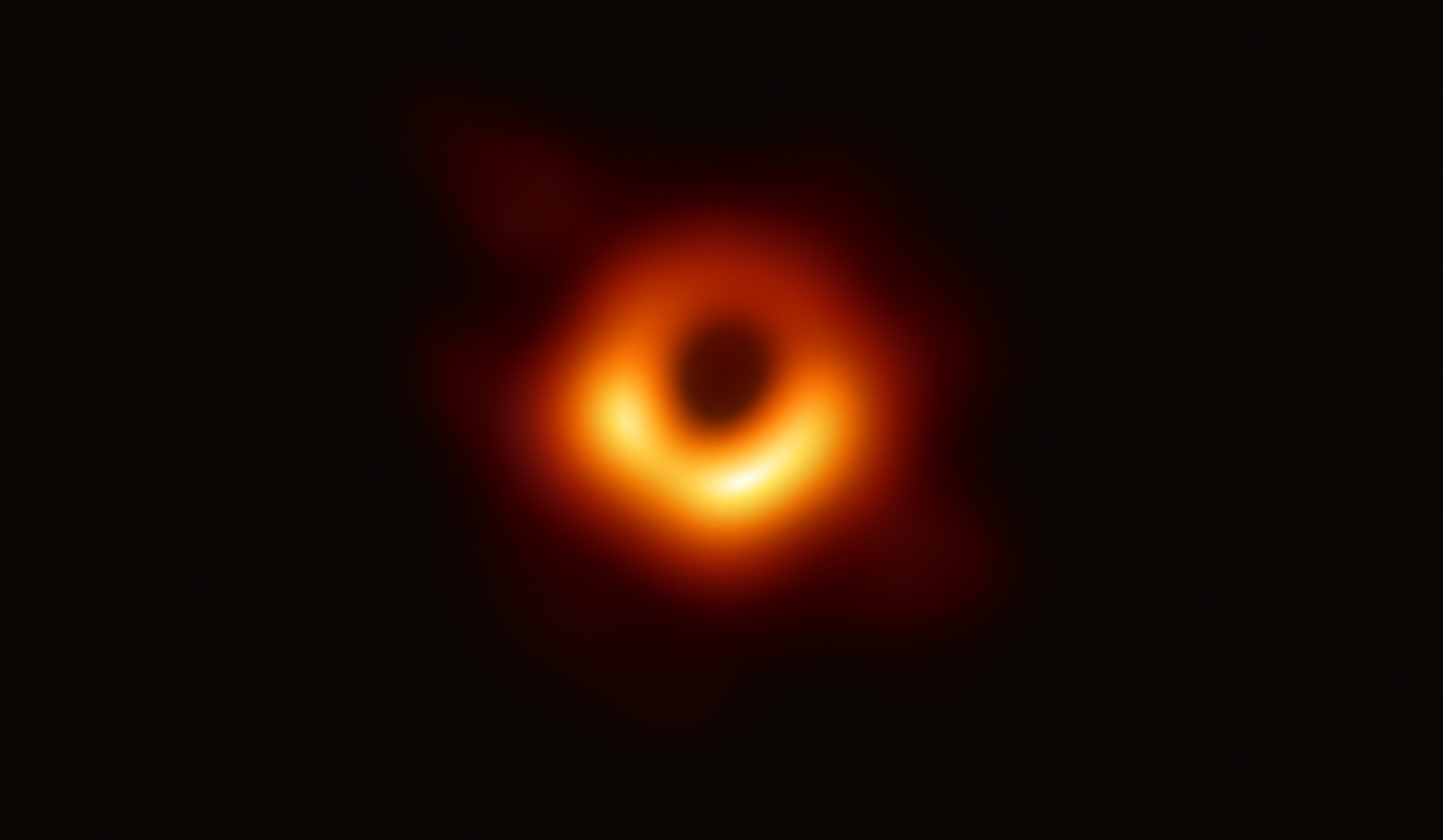
In 2019 the Event Horizon Telescope, a planet-spanning network of radio dishes working as one, produced the first direct image of a black hole: the glowing ring of hot matter around the supermassive black hole in galaxy M87, its dark centre cast by the event horizon itself. It was a landmark confirmation of a prediction made a century earlier.
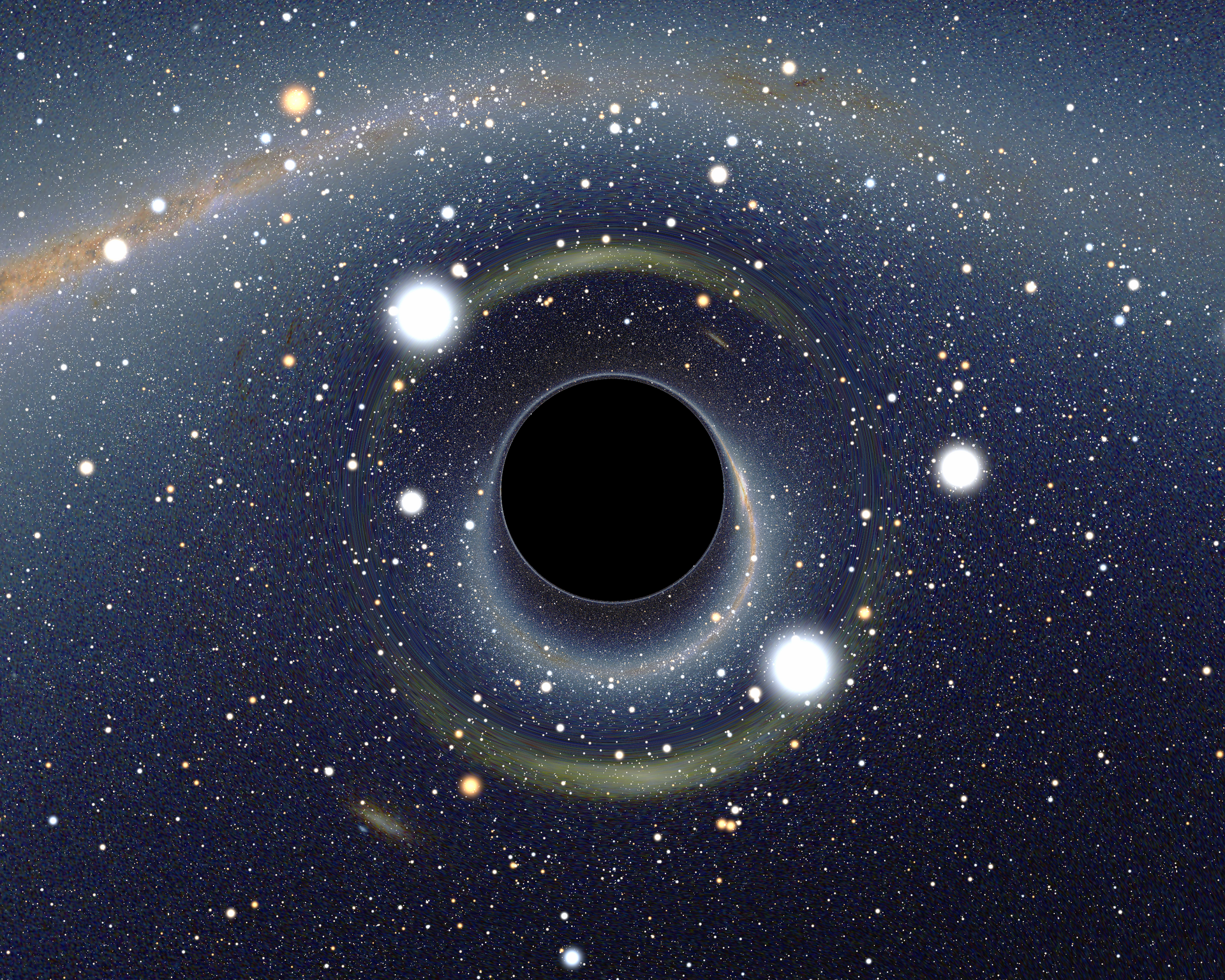
One of the eeriest features of a black hole is the way its gravity bends light from objects behind it, smearing them into rings and arcs. This gravitational lensing means a black hole does not simply hide what lies beyond it but warps and multiplies the view, a direct visual consequence of spacetime curving around such a concentration of mass.
Black holes are natural laboratories for physics at its limits, where gravity and quantum mechanics meet and where our two best theories of nature still fail to agree. They are not cosmic vacuum cleaners, at a distance their gravity is no different from that of any object of the same mass, but up close they warp space, slow time, and tear matter apart, making them some of the most extreme environments in the universe.
