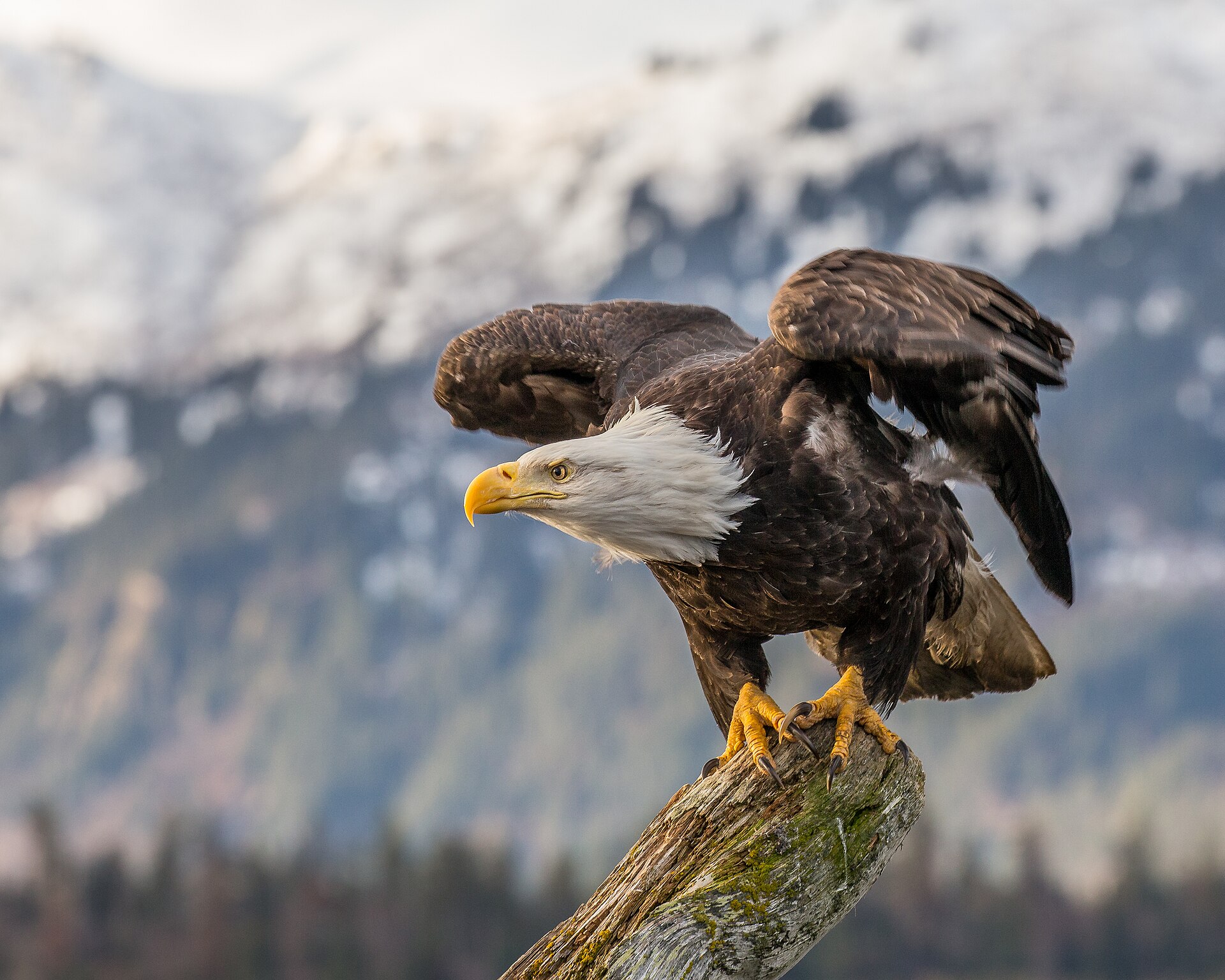
The bald eagle is a large bird of prey native to North America and the national bird and emblem of the United States. With its white head and tail, dark brown body, and piercing yellow eyes and beak, it is one of the most majestic and instantly recognisable birds in the world.
The bald eagle is not actually bald; its name comes from an old meaning of the word, "white-headed." With a wingspan that can exceed two metres, the bald eagle is a powerful flier, soaring effortlessly on rising air and diving with great speed and force, its keen eyes able to spot a fish from high above the water.
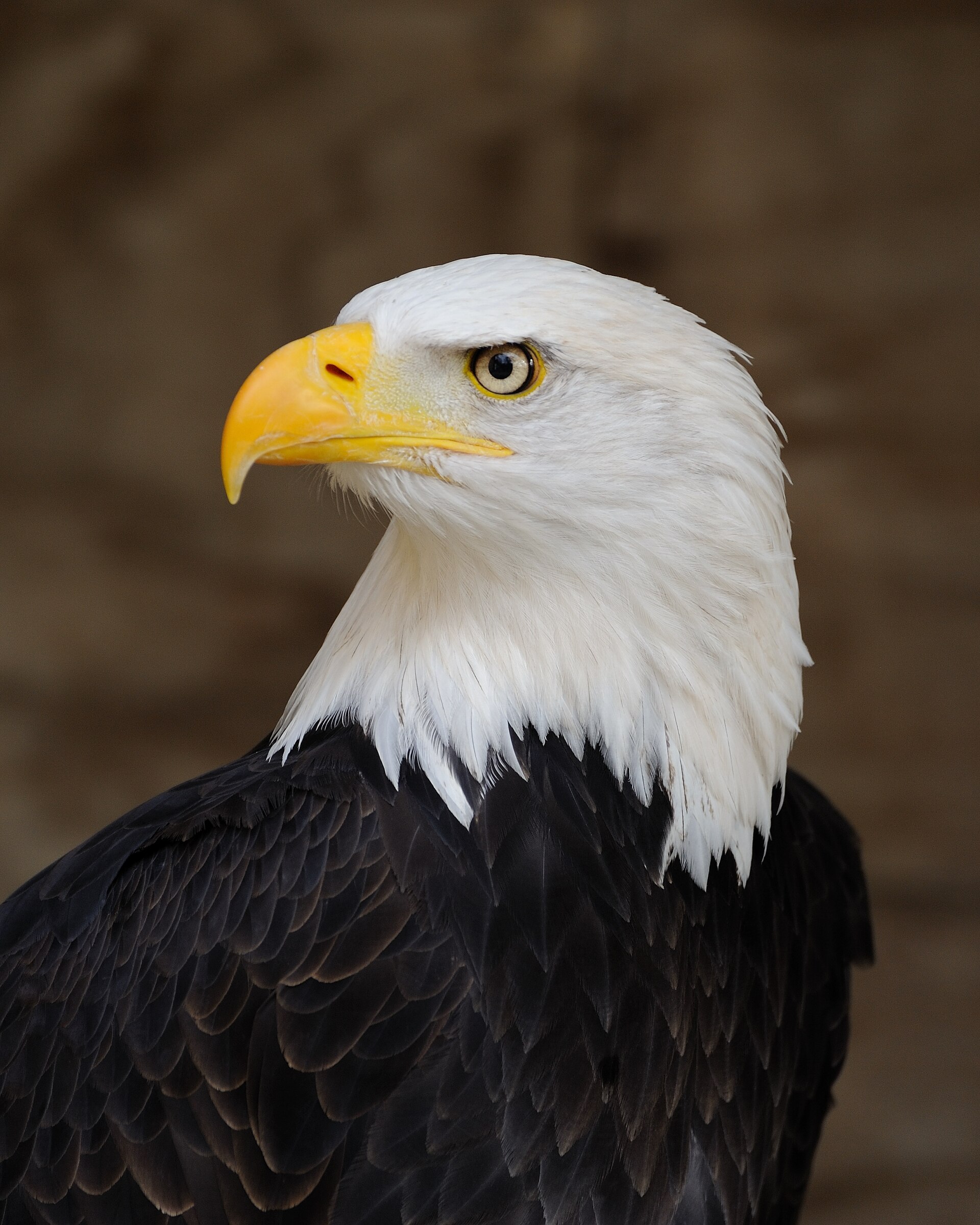
Adults have a striking snowy-white head and tail that contrast with the dark body, but young birds look quite different, mottled brown all over, and they take about five years to gain the full adult plumage. This slow change means a young bald eagle is often mistaken for a different bird entirely.
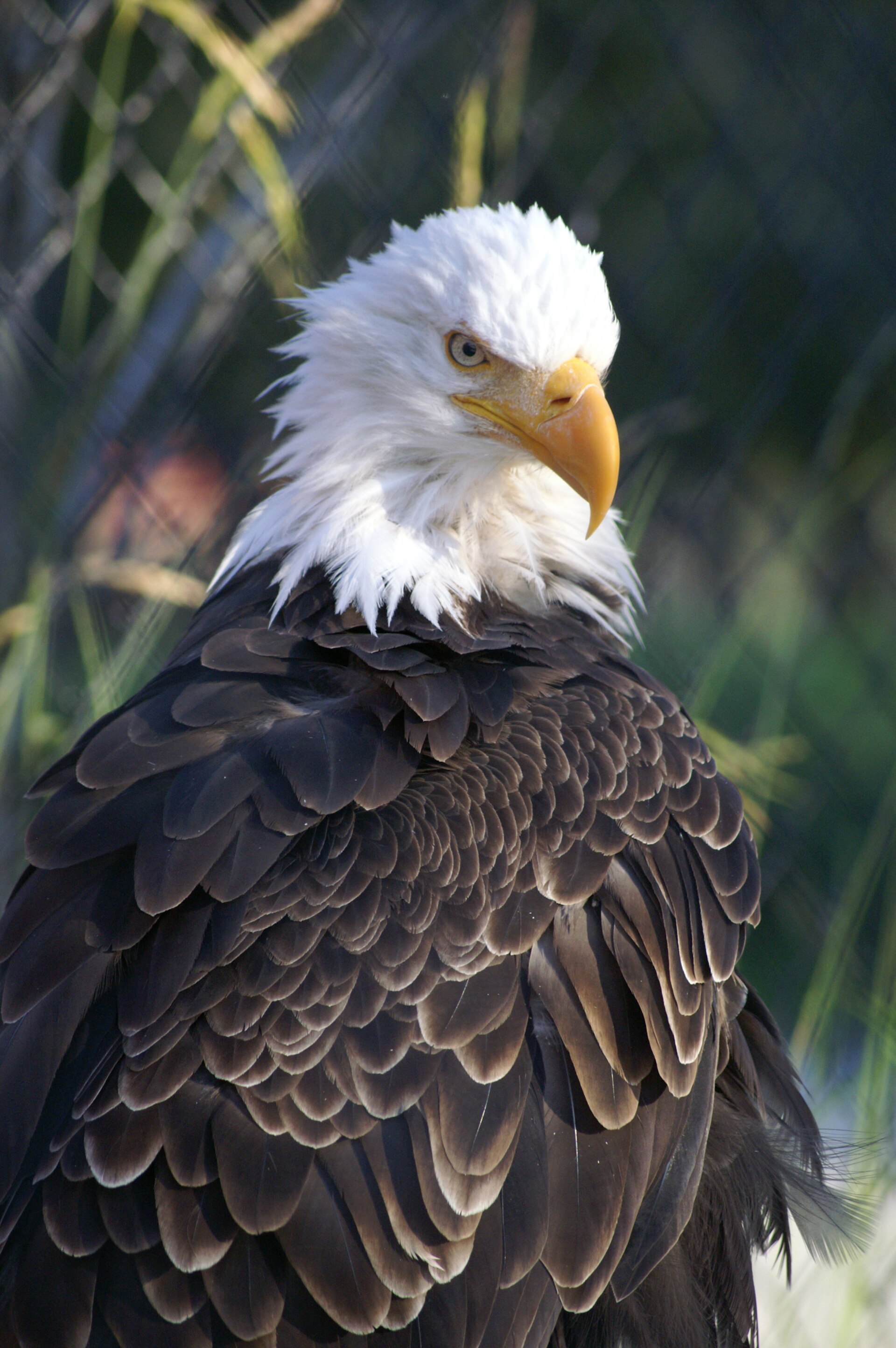
Bald eagles live near water, along coasts, lakes, and rivers, because their favourite food is fish, which they snatch from the surface with their powerful talons. They are also opportunists, taking birds and small mammals and readily scavenging carrion or stealing prey from other birds. They build some of the largest nests of any bird, great platforms of sticks added to year after year until they can weigh as much as a tonne.
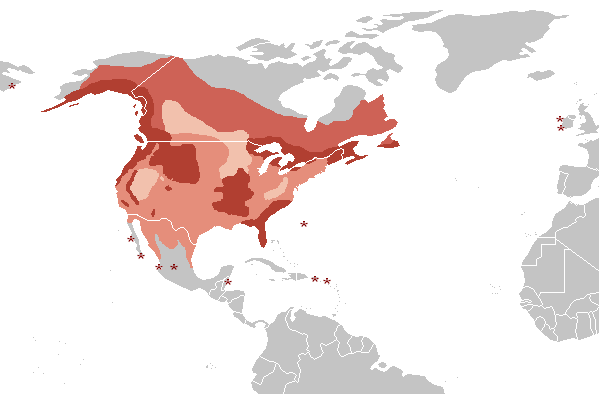
The bald eagle ranges widely across North America, from the far north of Alaska and Canada down through much of the United States, wherever there is open water and tall trees to nest in. Many northern eagles migrate south for the winter, gathering in large numbers at rivers where fish are plentiful.
The bald eagle's story is one of conservation's great success stories. By the mid-twentieth century the species had been devastated, its numbers collapsing largely because of the pesticide DDT, which caused eagles to lay eggs with shells so thin they broke before hatching. After DDT was banned and the birds were given legal protection, bald eagle numbers recovered dramatically, and the species was eventually removed from the list of those in danger.
The bald eagle has been the emblem of the United States since 1782, chosen for its strength, beauty, and long life, and it appears on the country's seal, currency, and countless official symbols. Beyond its national role, it holds deep spiritual significance for many Native American peoples.
Today, soaring once more over much of the continent, the bald eagle stands both as a symbol of a nation and as a reminder that determined conservation can reverse even severe decline. Its recovery is held up as proof that a species can be brought back from the edge when people choose to act.
