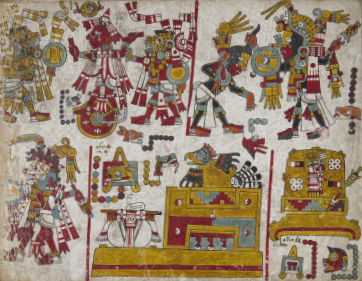
The Aztec Empire was a powerful state that dominated central Mexico in the fifteenth and early sixteenth centuries, until it was conquered by Spanish invaders in 1521. Centred on the magnificent city of Tenochtitlan, it was a sophisticated civilization with grand cities, advanced agriculture, and a rich religious culture.
The people we call the Aztecs called themselves the Mexica. According to their own histories, they were once a wandering people who arrived in the Valley of Mexico relatively late and were at first looked down on by the established cities. From these humble beginnings they rose, within a few generations, to dominate the region.
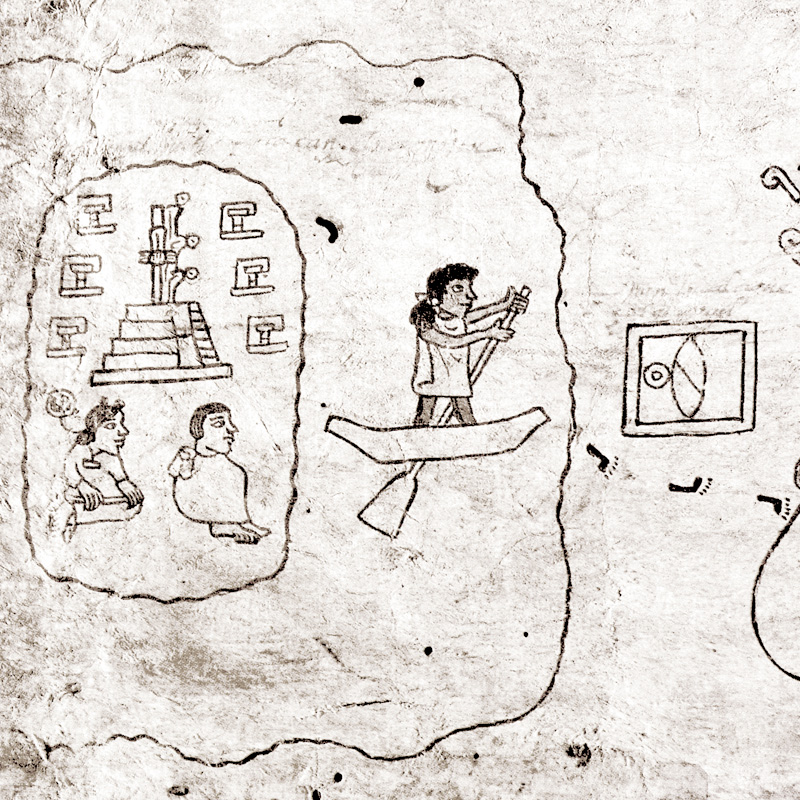
The Mexica founded their capital, Tenochtitlan, on an island in a lake, on the site of modern Mexico City. Legend says they settled where they saw an eagle perched on a cactus, a scene still on the Mexican flag. The city grew into one of the largest in the world, larger than most European capitals of the time.
Tenochtitlan was a marvel of engineering, linked to the shore by great causeways and crossed by canals. Aqueducts brought fresh water, and floating gardens called chinampas, built up from the lake bed, produced abundant crops to feed a huge population. The Spanish who first saw it compared it to an enchanted vision.
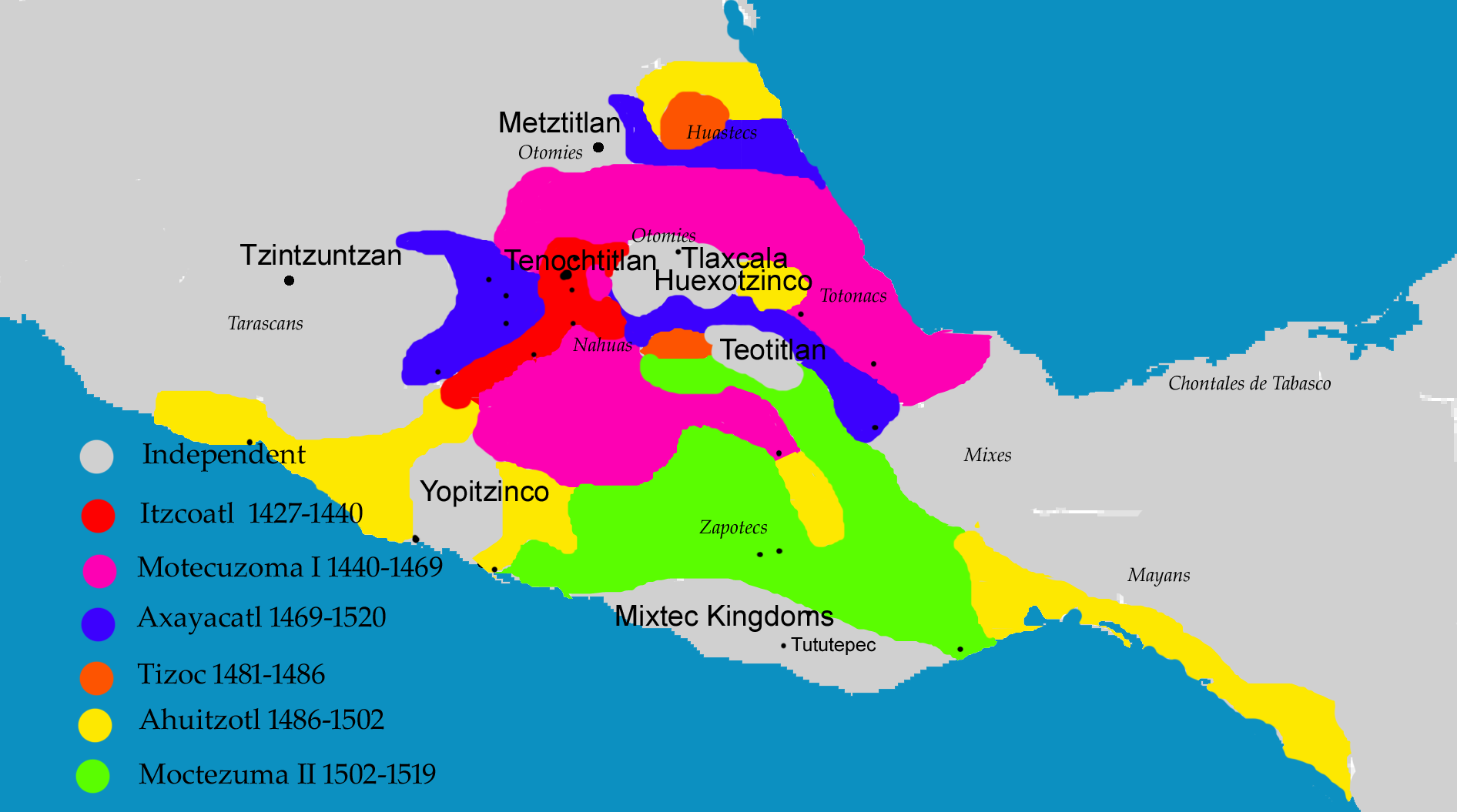
The empire expanded through conquest and alliance, demanding tribute from subject peoples across a wide region: food, cloth, feathers, gold, and labour. Rather than govern conquered lands directly, the Aztecs often left local rulers in place so long as the tribute flowed, building a network of dominance over many peoples.
Aztec society was highly organized, with nobles, priests, warriors, merchants, craftsmen, and farmers each in their place. Education was valued, and there were schools for both nobles and commoners. A class of long distance merchants traded across great distances and even served as the empire's eyes and ears.
Religion was central to Aztec life, with a complex pantheon of gods and an elaborate calendar governing festivals. Their rituals included human sacrifice, which they believed was necessary to keep the Sun moving and the world in balance. The scale of these rites has both fascinated and horrified later observers.
In 1519 the Spanish conquistador Hernán Cortés arrived. Within two years, aided by native peoples who resented Aztec rule, by superior weapons, and above all by devastating European diseases to which the Aztecs had no immunity, he toppled the empire. The fall of Tenochtitlan in 1521 was one of history's great turning points.
Though the empire fell, Aztec heritage endures in the language, food, and traditions of Mexico, and the Nahuatl tongue is still spoken by many. The ruins beneath Mexico City, uncovered by archaeologists, continue to testify to the achievements of this remarkable civilization.
