The atom is the basic building block of ordinary matter, the smallest unit of a chemical element that retains its properties. Everything you can see and touch, from the air to the stars, is built from atoms, and yet they are so small that millions could fit across the width of a human hair.
An atom is mostly empty space. At its centre is a tiny, dense nucleus made of positively charged protons and neutral neutrons, and around this nucleus swarm negatively charged electrons. If an atom were scaled up to the size of a sports stadium, the nucleus would be no bigger than a pea at the centre, with the electrons whirling around the stands.
The number of protons defines which element an atom is: one proton makes hydrogen, six make carbon, seventy-nine make gold. Atoms of the same element can differ in their number of neutrons, giving forms called isotopes, and they can gain or lose electrons to become charged ions, but change the protons and you change the element itself.
The atom is held together by two of nature's fundamental forces. The electromagnetic force binds the negatively charged electrons to the positive nucleus, while a much stronger force, fittingly called the strong force, glues the protons and neutrons together in the nucleus against the electrical repulsion of the like-charged protons.
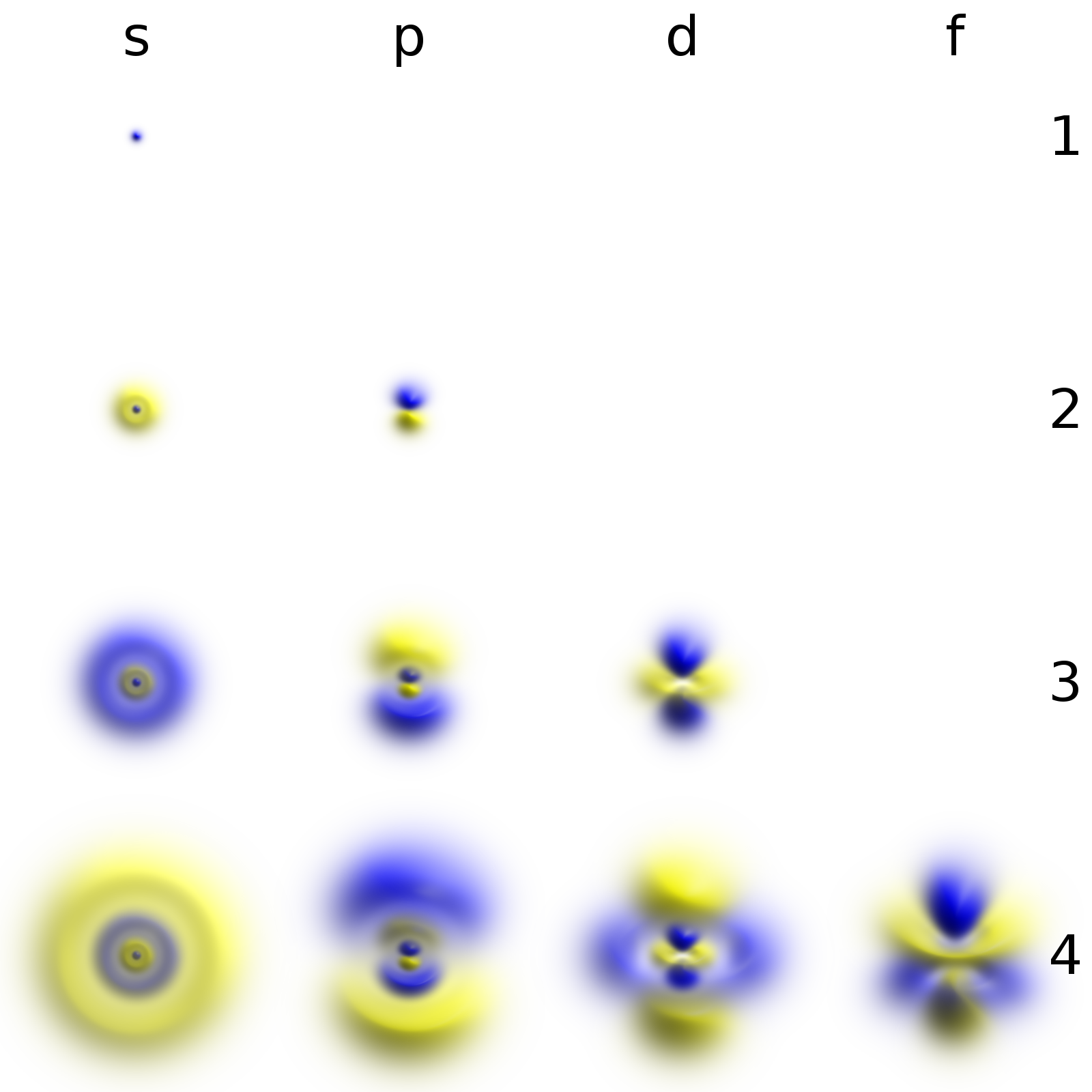
At this scale the familiar rules of everyday physics give way to quantum mechanics. Electrons do not orbit the nucleus like planets around the sun; instead they exist as fuzzy clouds of probability, more likely to be found in some regions, called orbitals, than others. These orbitals, and the way electrons fill them, determine how atoms bond together to form molecules, and so they underlie all of chemistry.
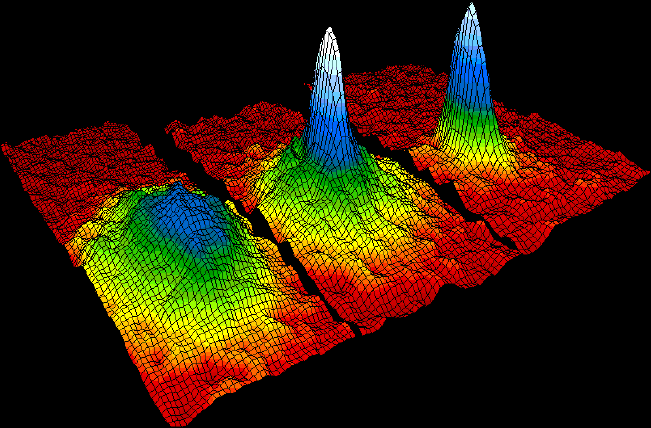
Pushed to extremes, collections of atoms behave in astonishing ways. Cooled to within a whisker of absolute zero, certain atoms can merge into a single shared quantum state called a Bose-Einstein condensate, in which thousands of atoms act as one. Such exotic states reveal the deep quantum nature of matter that is hidden at everyday temperatures.
The nucleus holds an immense amount of energy. Splitting a heavy nucleus apart, a process called fission, releases energy that powers nuclear reactors and atomic bombs. Forcing light nuclei together, called fusion, releases even more, and is the process that makes the Sun and stars shine. Both reveal that the mass of an atom can be converted into vast amounts of energy, as captured in Einstein's famous equation.
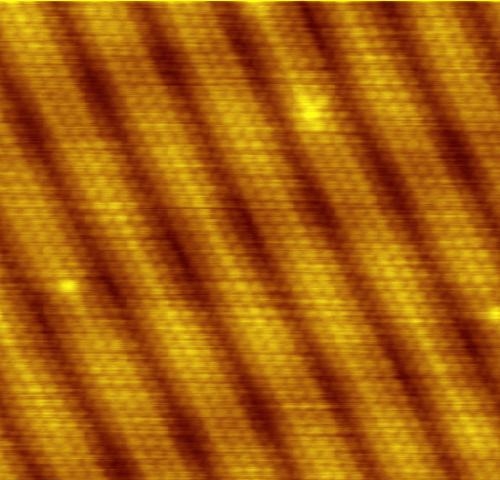
The notion that matter is made of indivisible particles dates back to ancient Greek philosophers, but it was only confirmed and refined over the last two centuries through careful experiment. We now know atoms are not truly indivisible, and modern microscopes can even image individual atoms directly. Understanding the atom transformed science and technology, giving us chemistry, electronics, nuclear power, and a deep new picture of what the world is made of.
