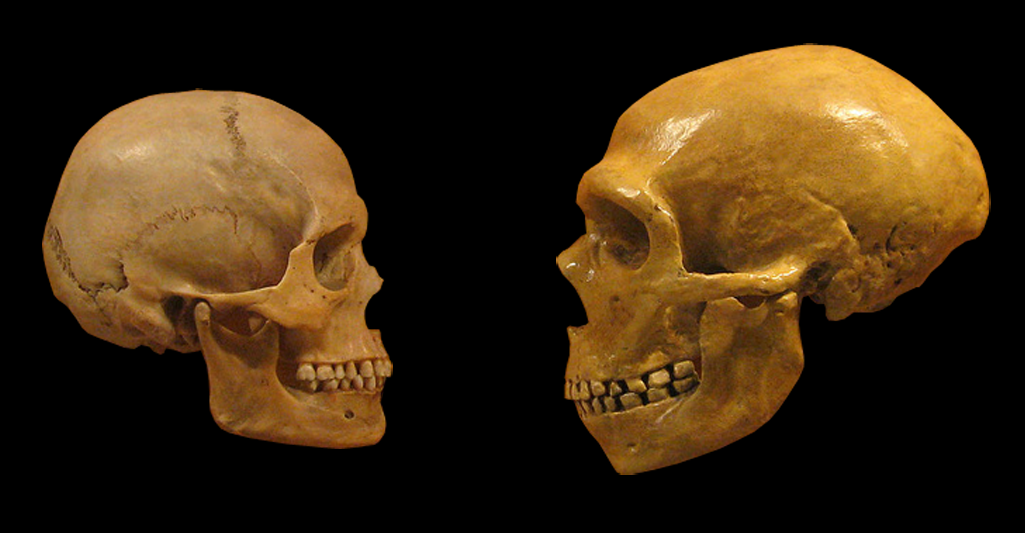
The aquatic ape hypothesis is the controversial idea that human ancestors went through a phase of living partly in water, and that this shaped many features of the human body. It is a striking proposal that most scientists regard as unsupported, but it remains widely discussed.
Humans differ from other apes in several puzzling ways. We walk upright, have little body hair, carry a layer of fat beneath the skin, and have unusual control over our breath and voice. Each of these traits has prompted questions, and the aquatic ape hypothesis tries to explain the whole cluster at once.

The appeal of the hypothesis is its sweep. Rather than explaining each human peculiarity separately, it proposes a single cause: that our ancestors spent a great deal of time wading, swimming, and gathering food in shallow water. From this one scenario it tries to account for hairlessness, fat, upright posture, and more.
First suggested in the 1960s and later popularized by the writer Elaine Morgan, the idea holds that an aquatic or semi aquatic period would favour certain traits. Hairlessness and a streamlining layer of fat, it argues, would help in water, much as is seen in some water dwelling mammals like seals and whales.
Supporters point to features they say fit a watery past: our subcutaneous fat, our descended voice box and breath control useful for diving, our webbed fingers in early development, and our love of water and ability to swim. Each, they argue, makes more sense for a partly aquatic ancestor than a purely land bound one.
Mainstream scientists are highly sceptical. They point out that each human trait already has its own well supported explanation, rooted in life on land. Upright walking, for instance, is widely linked to moving efficiently across open ground, not to wading, and hairlessness to keeping cool while active in the heat.
Crucially, the fossil and archaeological record does not show an aquatic phase in human evolution. The environments where early humans lived, as revealed by their bones and the animals and plants found with them, point to woodlands, grasslands, and lake margins, not to a life spent largely in the water.
Part of the problem is that the hypothesis is difficult to test. It can be stretched to explain almost any trait after the fact, which makes it hard to pin down and check against evidence. A good scientific idea must make risky predictions that could be proved wrong, and this one struggles to do so.
While a few of its observations remain genuinely interesting, the aquatic ape hypothesis is not accepted as a serious account of human evolution. It survives mainly as a popular and provocative idea, a reminder of how tempting a single, sweeping explanation can be, and how carefully such explanations must be tested.
