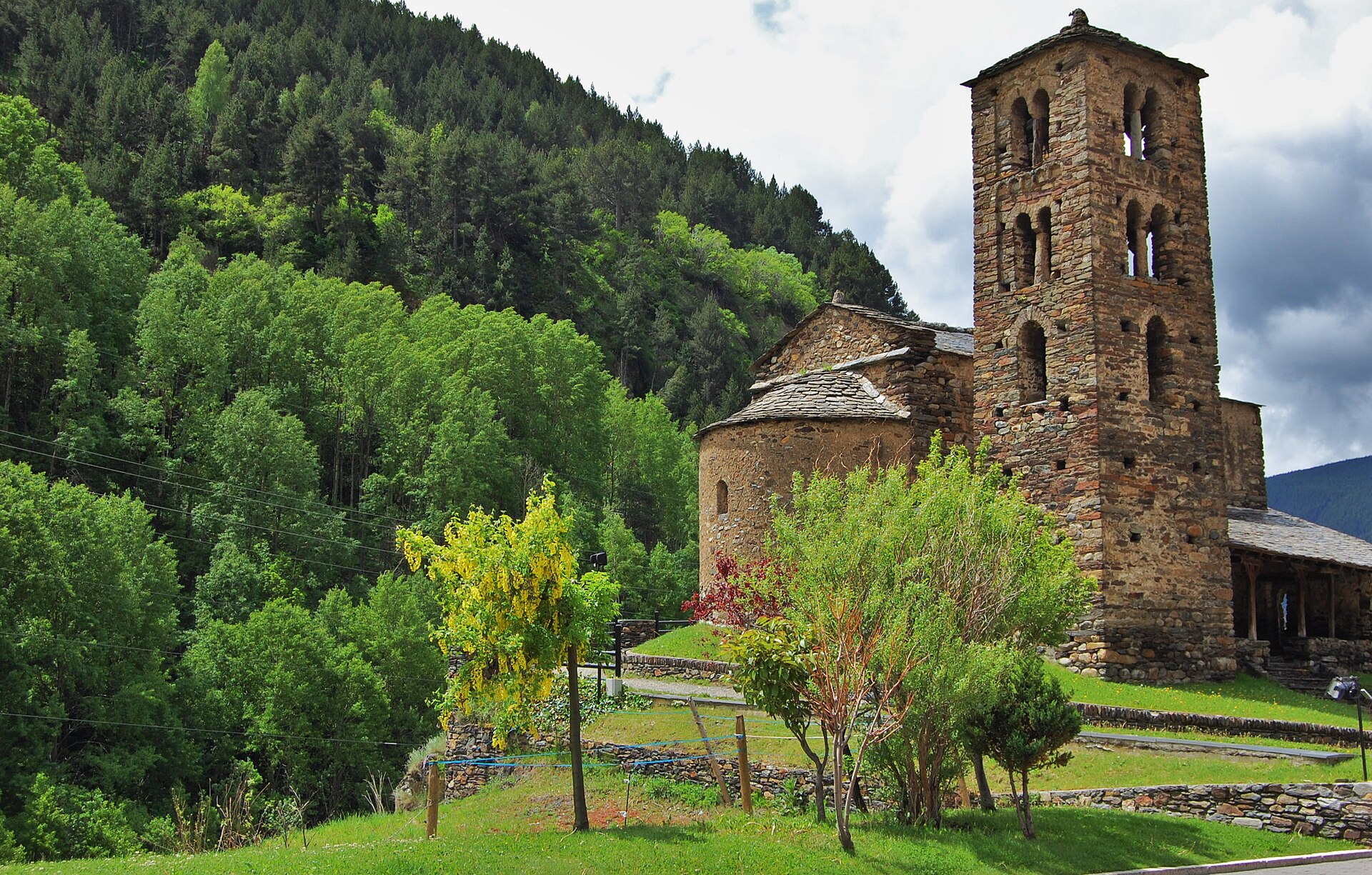
Andorra is a tiny landlocked principality high in the eastern Pyrenees, wedged between France and Spain. One of the smallest countries in Europe, it has a unique form of government, a co-principality whose two heads of state are the President of France and a Spanish bishop, an arrangement surviving from the Middle Ages. A land of dramatic mountains and deep valleys, Andorra long lived as a poor, isolated pastoral society, but in modern times it has grown prosperous on tourism, skiing, and its status as a duty-free shopping haven.
According to tradition, Andorra owes its existence to Charlemagne, and for centuries it was governed under a medieval settlement that placed it jointly under a French count and the Spanish Bishop of Urgell, a shared lordship that, remarkably, endured into modern times. This left Andorra a self-governing pocket nation that escaped the wars and upheavals reshaping its giant neighbours. It remained a remote, traditional society until the twentieth century, when it modernised, adopted a formal constitution in 1993, and took its place as a sovereign member of the international community.
Andorran tradition holds that Charlemagne granted the people of the valleys their freedom and self-government as a reward for helping his armies fight the Moors, and that his son later entrusted them to the Bishop of Urgell, the root of the famous co-principality. This founding story is dear to Andorrans, and the national anthem itself invokes Charlemagne. Historians, however, regard the tale as largely legendary, a later tradition rather than documented fact, even as the genuine medieval origins of the co-principality are well attested.
Andorra is an entirely mountainous country, set among the high peaks of the eastern Pyrenees, a rugged terrain of sharp ridges, glacial valleys, and mountain streams, with no flat lowland to speak of and one of the highest mean elevations of any country in Europe. The capital sits in a narrow valley, and settlements cling to the valley floors beneath the slopes. The dramatic alpine scenery, snowbound in winter and green in summer, is the foundation of the country's ski resorts and its appeal to hikers and tourists.
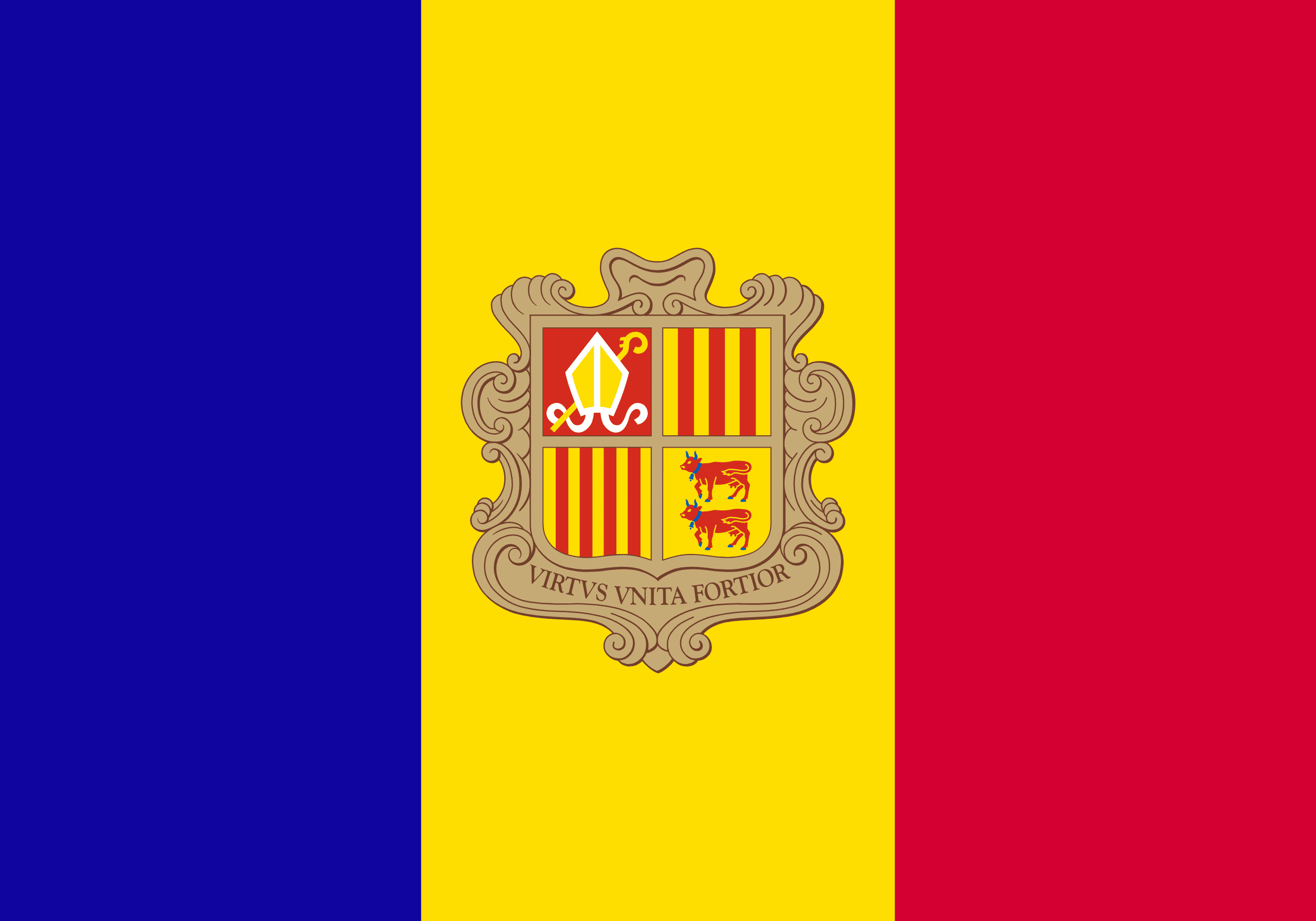
The flag of Andorra has three vertical bands of blue, yellow, and red, with the national coat of arms in the centre. The colours recall those of France and Spain, the country's two protecting neighbours and co-princes, reflecting Andorra's position and history between them. The coat of arms combines emblems of the Bishop of Urgell and of the historic French and Catalan lords associated with the country, beneath the motto meaning united strength is stronger, expressing the union at the heart of the unusual little state.
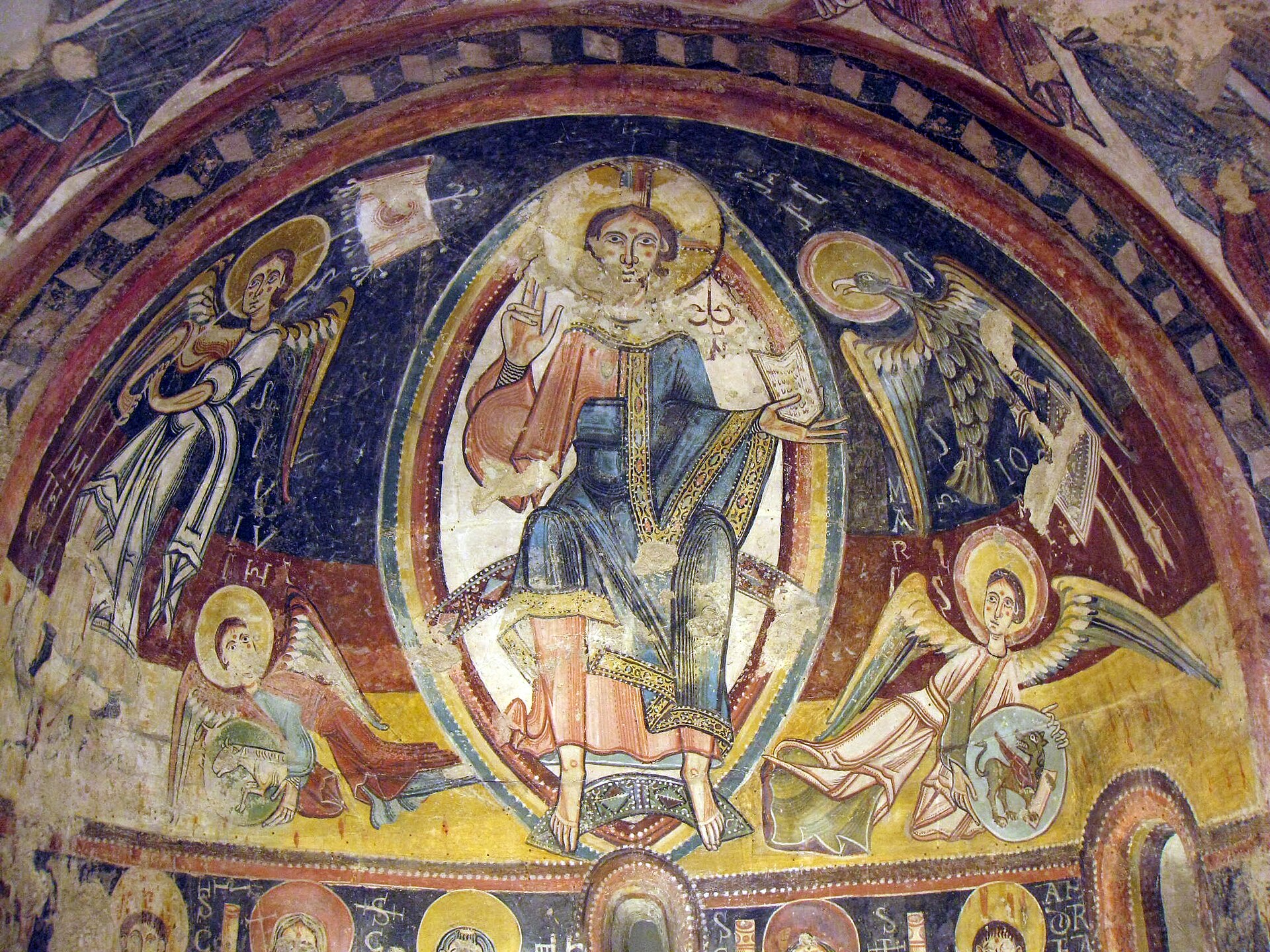
Andorra is an overwhelmingly Roman Catholic country, a faith woven into its very constitution through the role of the Bishop of Urgell as one of its two co-princes, a unique fusion of religious and political authority. Catholicism shapes the culture, the calendar, and the historic churches that dot the valleys, many of them fine examples of Romanesque architecture from the Middle Ages. While modern Andorra is religiously freer and more diverse than in the past, its Catholic heritage remains central to its identity and to the structure of the state itself.
Andorran cuisine reflects its mountain setting and its position between France and Spain, especially the neighbouring Catalan region with which it shares much. Hearty dishes suited to a cold climate predominate, such as escudella, a rich stew of meat and vegetables, grilled and roasted meats, trinxat, a dish of cabbage and potato with pork, and game from the mountains. Catalan and French influences appear throughout, and the food, like the country, draws on the traditions of both its great neighbours while keeping its own rustic, mountain character.
Agriculture has always been constrained by Andorra's steep and stony terrain, and farming was historically a matter of subsistence, centred on raising sheep and cattle on the high summer pastures and growing tobacco, hay, and a little produce on the scarce arable land. Tobacco was for a long time a notable local crop. Today agriculture plays only a tiny role in the economy, which depends overwhelmingly on tourism, the ski resorts, and duty-free retail, and the country imports nearly all of its food from its neighbours.
Andorra's most remarkable feature is the sheer endurance of its medieval co-principality, which has carried the little state, almost uniquely, from the feudal age into the present day with its peculiar dual sovereignty intact. The country quietly avoided the great conflicts that swept Europe. A modernising milestone came in 1993, when Andorra adopted its first written constitution, redefining the powers of the co-princes, establishing itself as a parliamentary democracy, and joining the United Nations as a fully sovereign nation.
Andorra has a population of around 80,000 people, of whom only a minority are Andorran citizens by descent, the rest being residents drawn from Spain, Portugal, France, and beyond by the country's prosperity, a legacy of decades of immigration. The official language is Catalan, shared with the neighbouring region of Spain, though Spanish, French, and Portuguese are all widely spoken. The population is concentrated in the capital, Andorra la Vella, the highest capital city in Europe, and the surrounding valleys, in one of the wealthiest and most distinctive small states on the continent.