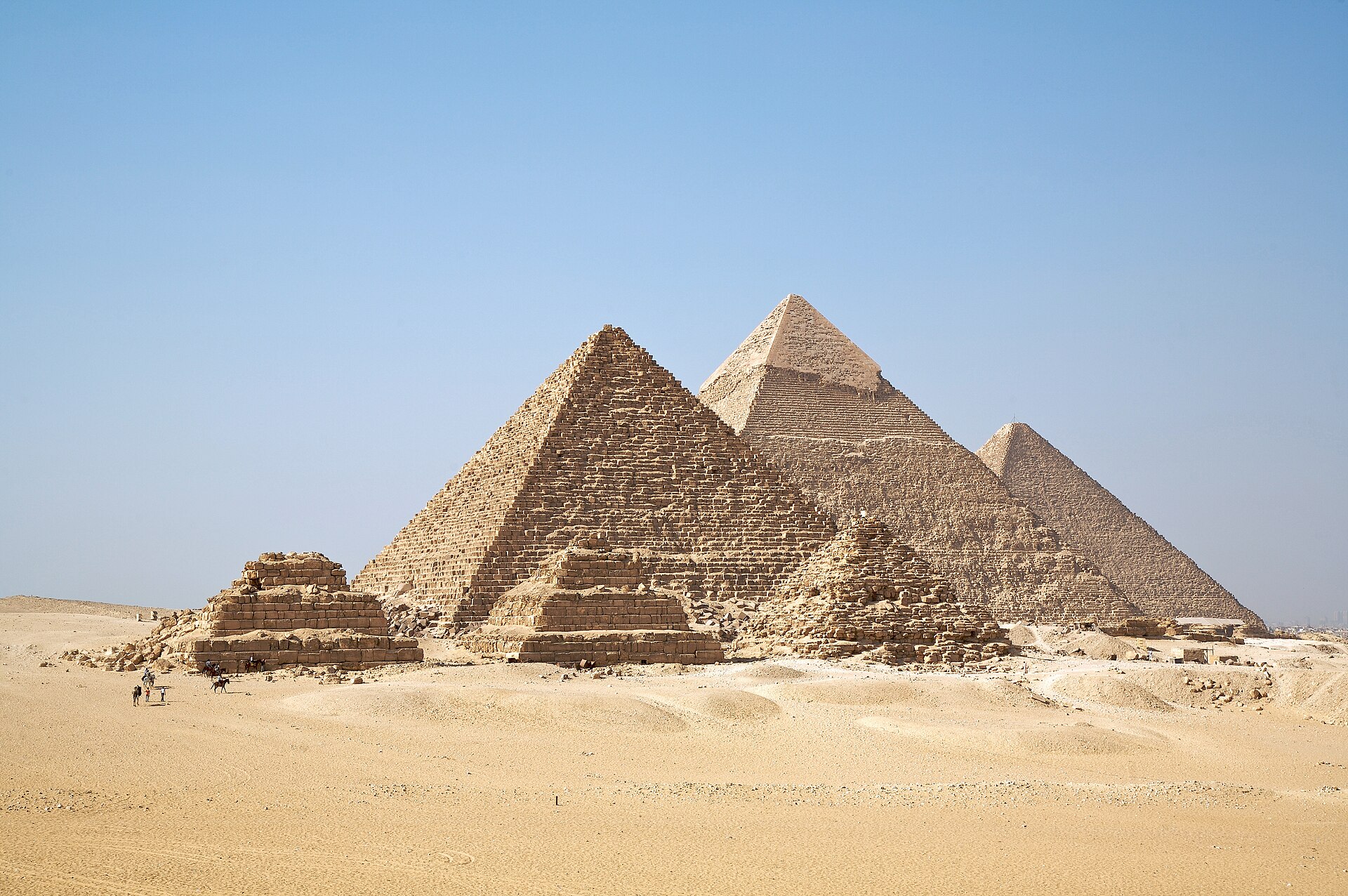
Ancient Egypt was one of the world's earliest and longest lasting civilizations, flourishing for roughly three thousand years along the banks of the Nile River in northeastern Africa. It is remembered for its monumental architecture, its distinctive writing system, and its rich religious traditions.
Egyptian life depended almost entirely on the Nile, whose yearly floods left behind a band of fertile soil that made farming possible in an otherwise harsh desert. This reliable abundance supported large populations, freed many people for specialized crafts and trades, and allowed a complex, centralized state to form thousands of years ago. The contrast between the green river valley and the surrounding sands shaped every aspect of Egyptian life.
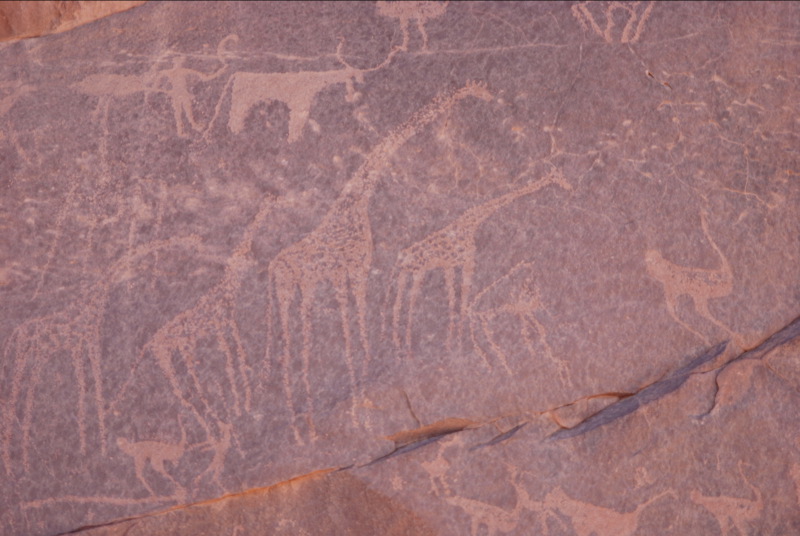
Long before the pyramids, the Sahara was wetter and greener, roamed by animals now found far to the south. Rock carvings left by early peoples record giraffes, ostriches, and cattle, a memory of the landscape from which Egyptian civilization would eventually emerge as the climate dried.
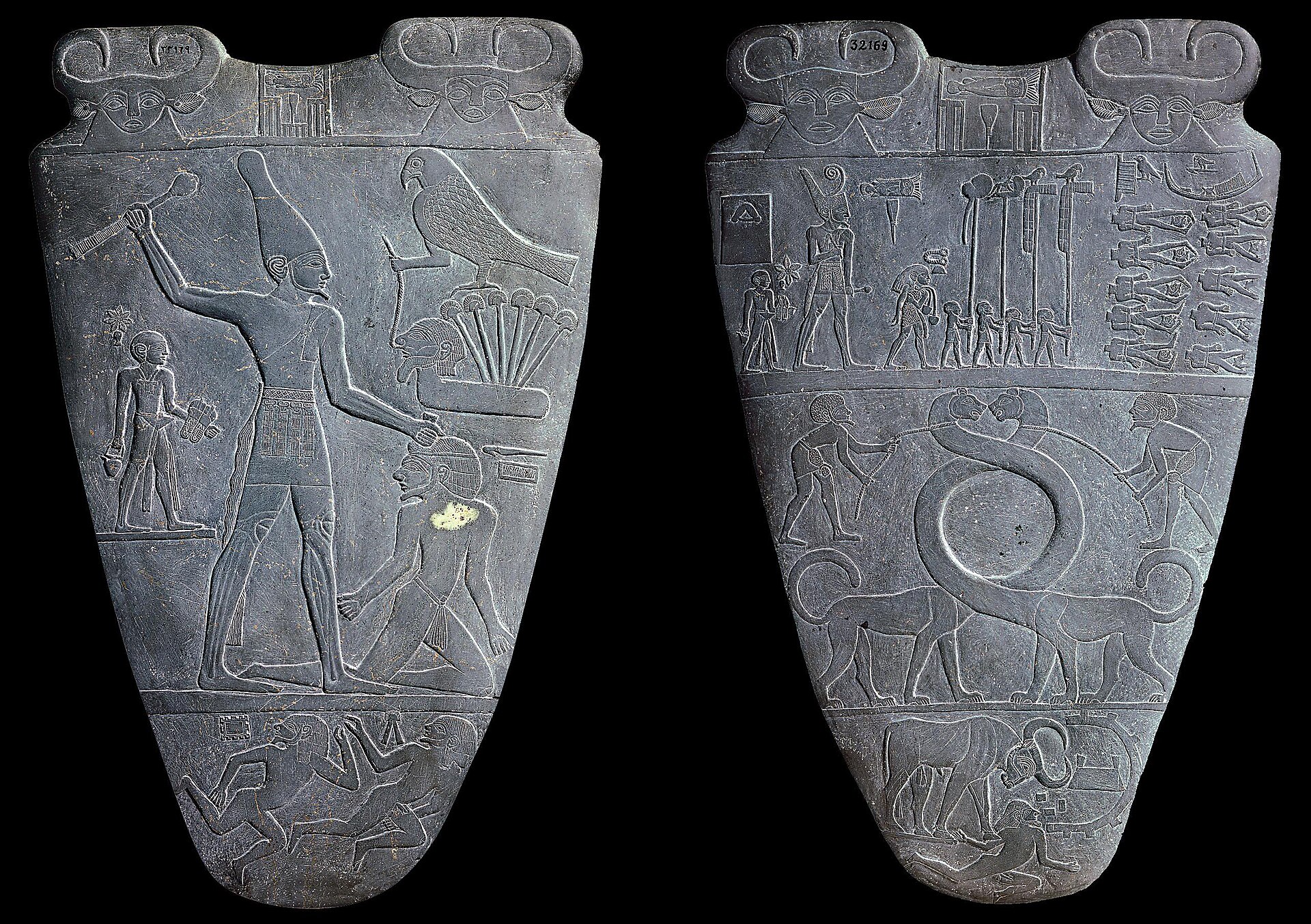
Around 3100 BC, the lands of Upper and Lower Egypt were unified under a single ruler, an event commemorated on the famous Narmer Palette. The kings, later called pharaohs, were regarded as living links between the people and the gods, and they commanded enormous resources of labor, grain, and devotion.
The Egyptians built on a scale that still amazes, from the Great Pyramids of Giza to vast temple complexes along the Nile. They developed hieroglyphic writing, kept detailed records, and made real advances in medicine, mathematics, and astronomy. Their elaborate belief in an afterlife shaped their art, their burial practices, and the great tombs that have preserved so much of their world.
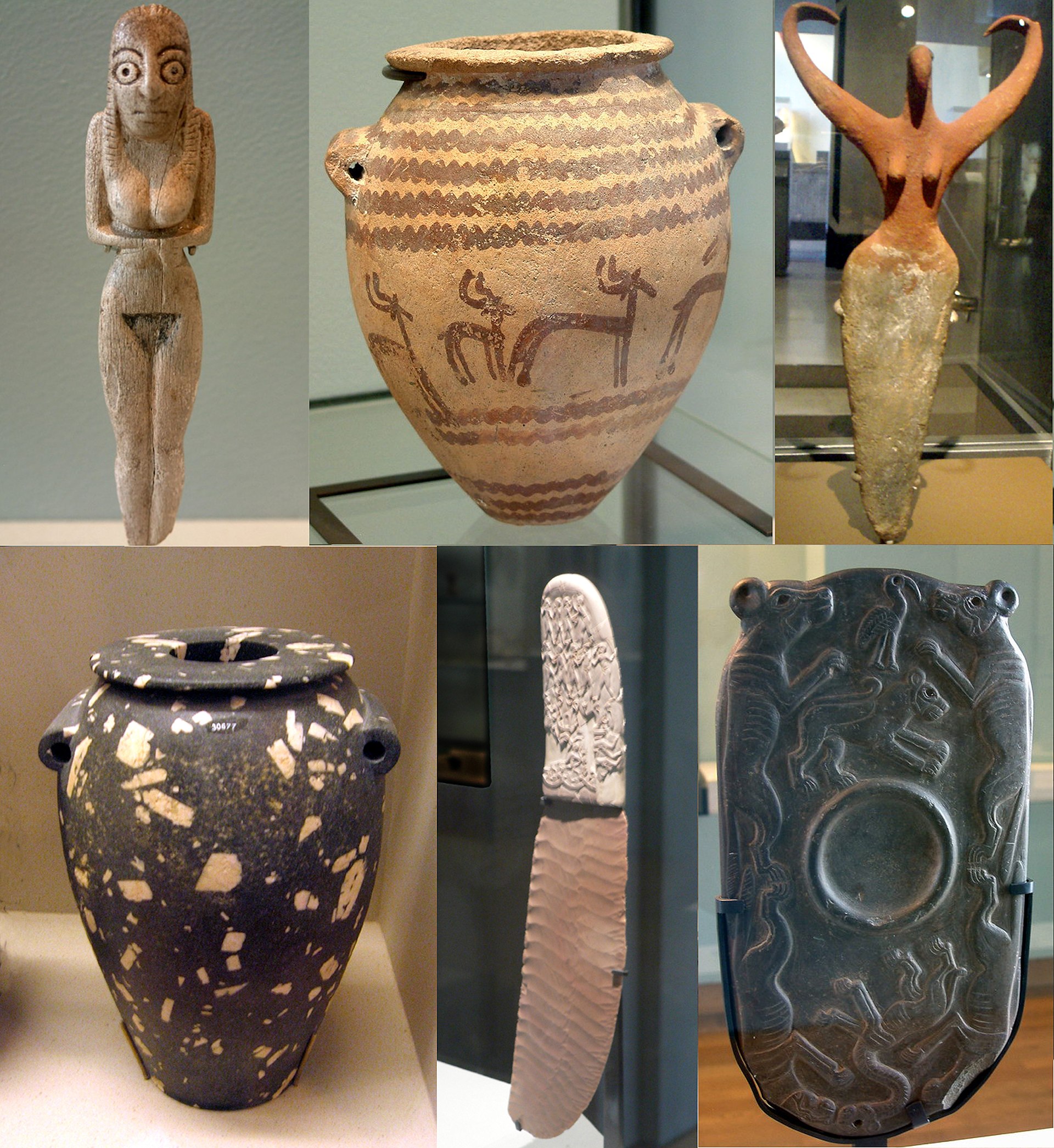
Much of what we know comes from objects buried with the dead and preserved by the dry climate, from everyday tools to dazzling royal treasures. These artifacts, gathered across the long sweep of Egyptian history, let archaeologists reconstruct daily life, belief, and craft in remarkable detail.
Though it was eventually absorbed by foreign powers, including the Greeks and Romans, ancient Egypt left a legacy that has fascinated the world ever since. Its monuments remain among the most recognizable on Earth, and the decoding of hieroglyphs in the nineteenth century reopened a window onto one of humanity's foundational civilizations.
