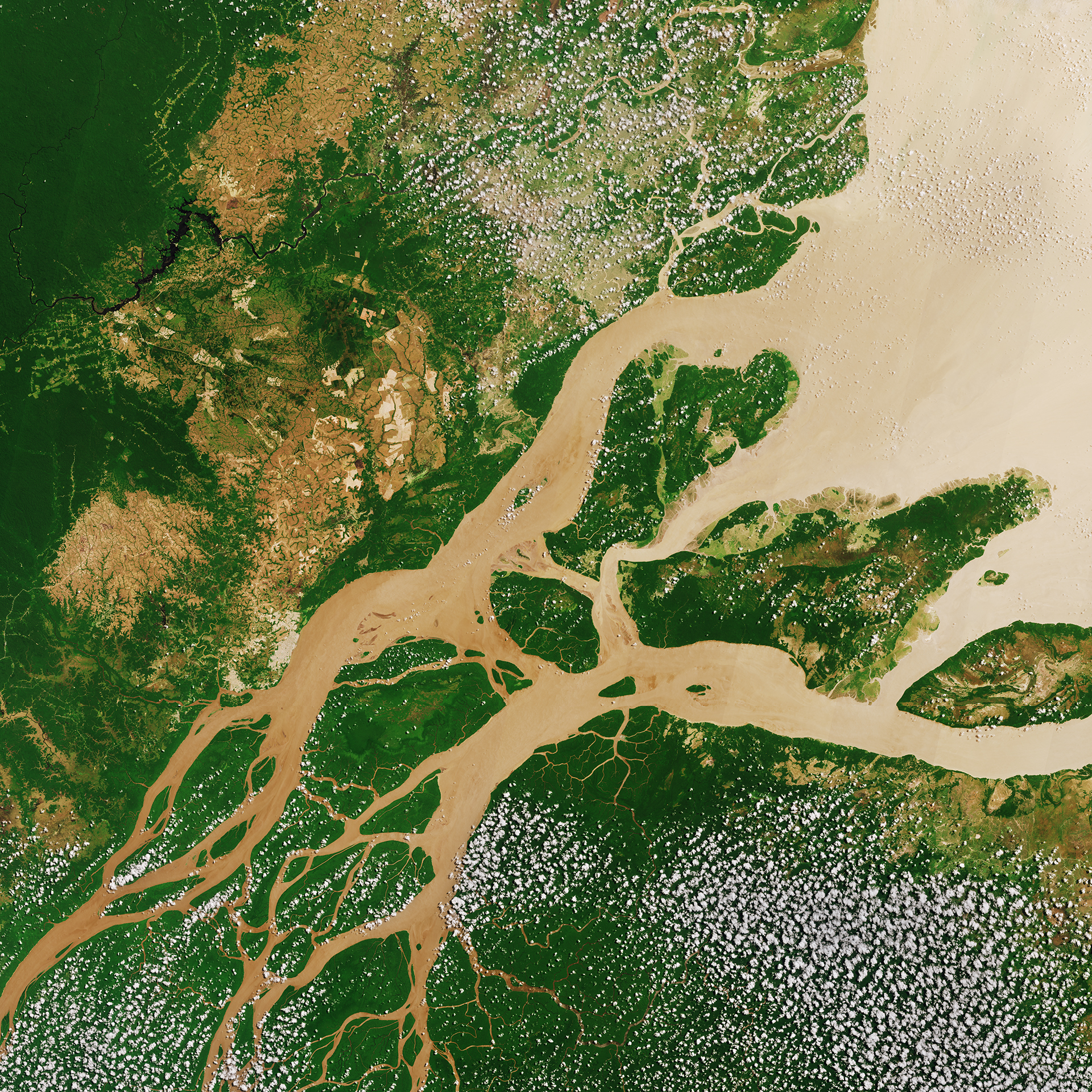
The Amazon is the largest river in the world by the volume of water it carries, winding across South America to the Atlantic Ocean. By some measures it is also the longest river on Earth, and it pours an astonishing fifth of all the river water that reaches the world's oceans.
The Amazon discharges more water than the next several largest rivers combined. So immense is its flow that it pushes fresh water far out into the salty Atlantic. In places during the wet season the river spreads tens of kilometres wide, so that standing on one bank you cannot see the other.
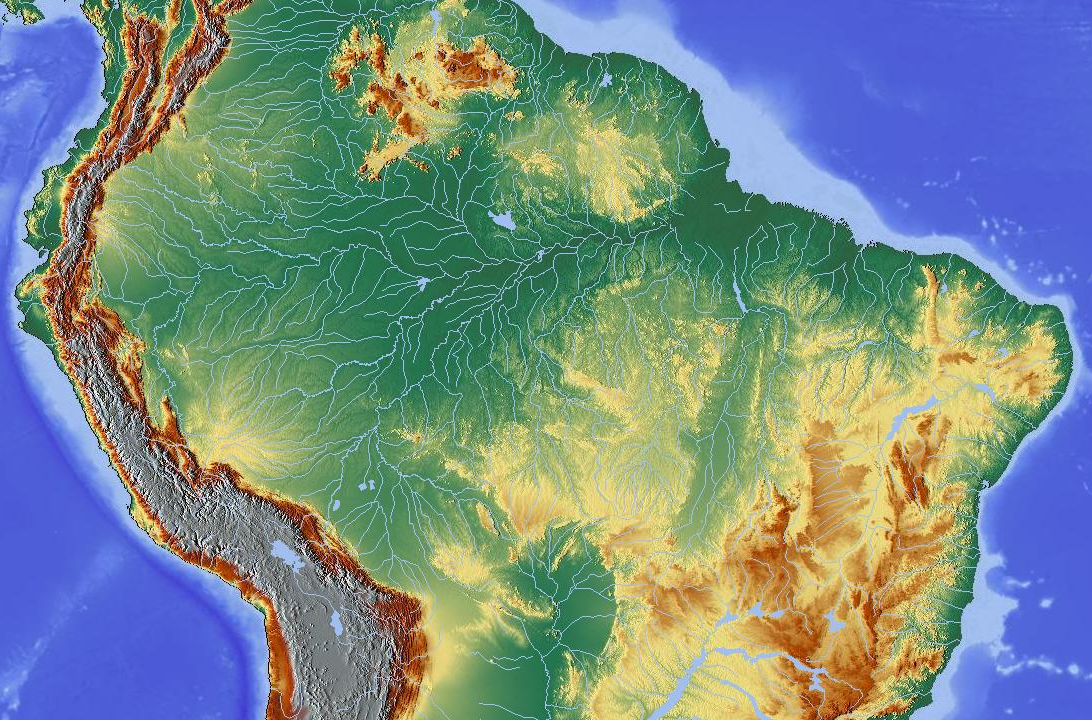
The Amazon rises high in the Andes mountains of Peru, only a short distance from the Pacific, then runs the entire width of the continent eastward to the Atlantic. Along the way it gathers water from a thousand tributaries, several of which would themselves rank among the world's great rivers.
The river and its tributaries drain an enormous basin spanning much of South America, fed by the heavy rains of the world's largest rainforest. This basin, the size of a continent in itself, gathers the runoff of vast forests and mountains and channels it into the single mighty stream of the Amazon.
Each year the river rises and falls dramatically, flooding huge areas of surrounding forest. Fish swim among the submerged trees, feeding on fruit and spreading seeds, and the whole ecosystem is tuned to this yearly pulse of high and low water. The line between river and forest is constantly shifting.
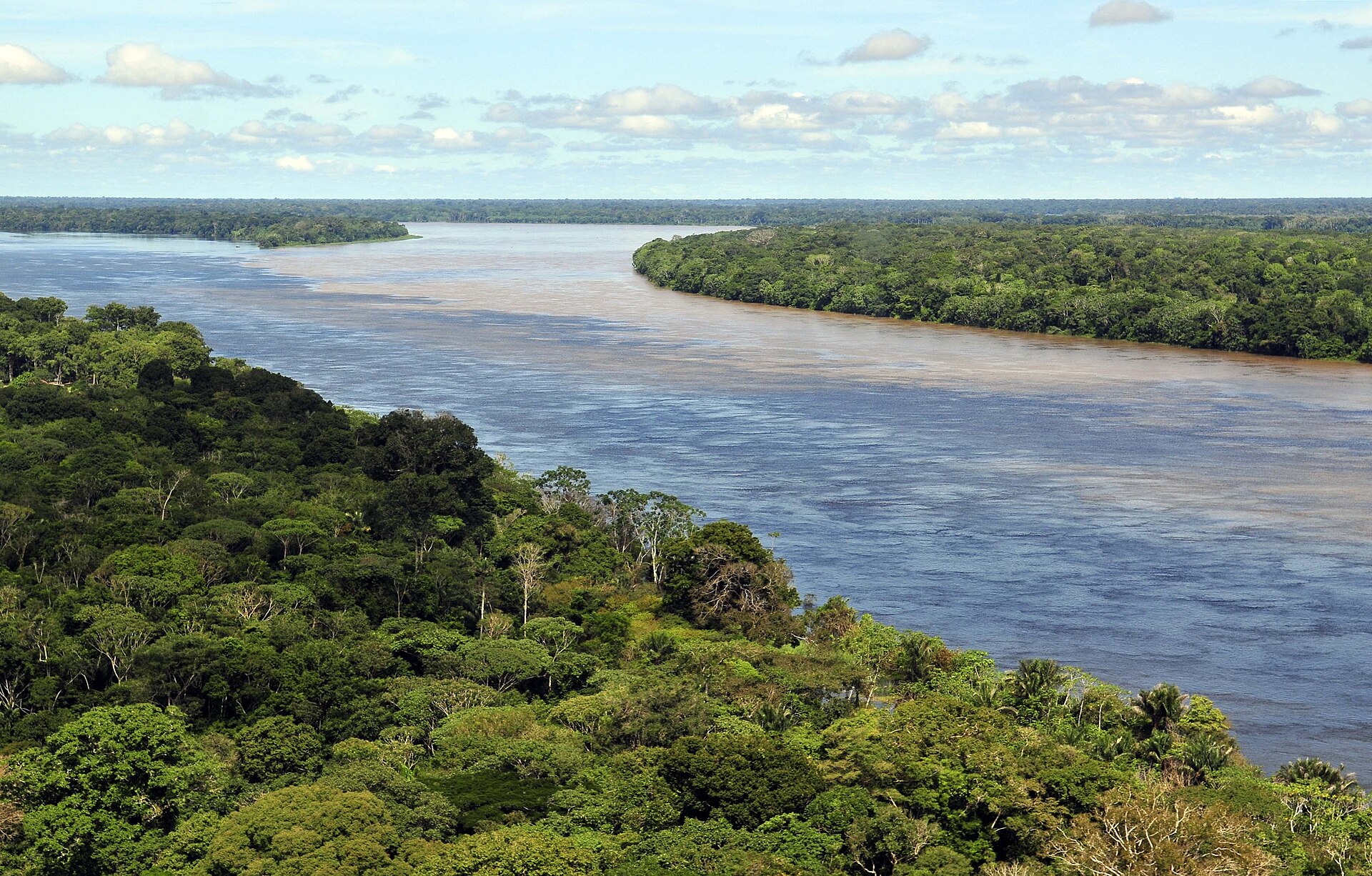
The river and its forest form one of the richest ecosystems on the planet, home to an extraordinary variety of life. Its waters teem with thousands of fish species, including piranhas and giant catfish, along with pink river dolphins, caimans, anacondas, and countless creatures found nowhere else.
Near the city of Manaus, the dark, tannin stained water of one great tributary meets the pale, sediment rich water of another and the two flow side by side for kilometres without mixing, a striking natural spectacle known as the meeting of the waters, caused by their different temperatures, speeds, and densities.
The Amazon basin plays a major role in regulating regional rainfall and even the global climate, recycling vast amounts of water into the air and storing huge quantities of carbon in its forests. What happens to the river and its forest matters far beyond South America.
The Amazon supports millions of people, including many Indigenous communities, as well as countless species. It is also under growing pressure from deforestation, mining, dam building, and a changing climate. The health of this immense river and the forest it sustains has become a matter of urgent global importance.
