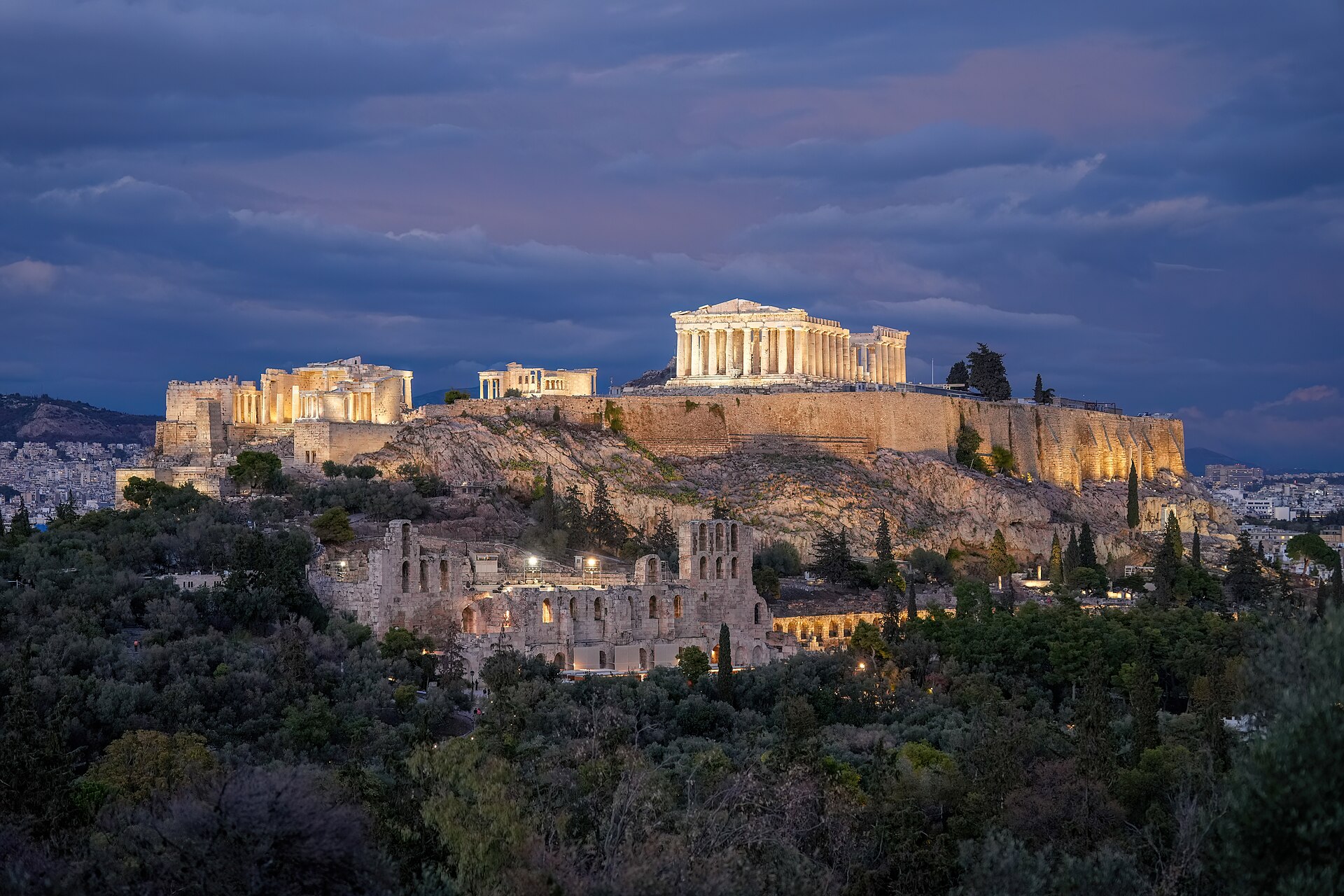
The Acropolis of Athens is an ancient citadel on a rocky hill above the city, crowned by the temples of classical Greece. Its most famous building, the Parthenon, is one of the greatest masterpieces of architecture and an enduring symbol of Western civilization.
The word acropolis means "high city," and the rocky outcrop has been used since prehistoric times, first as a fortress and royal seat, then as a sacred precinct. Rising steeply above Athens, it was both a stronghold and a holy place, the natural heart of the city below.
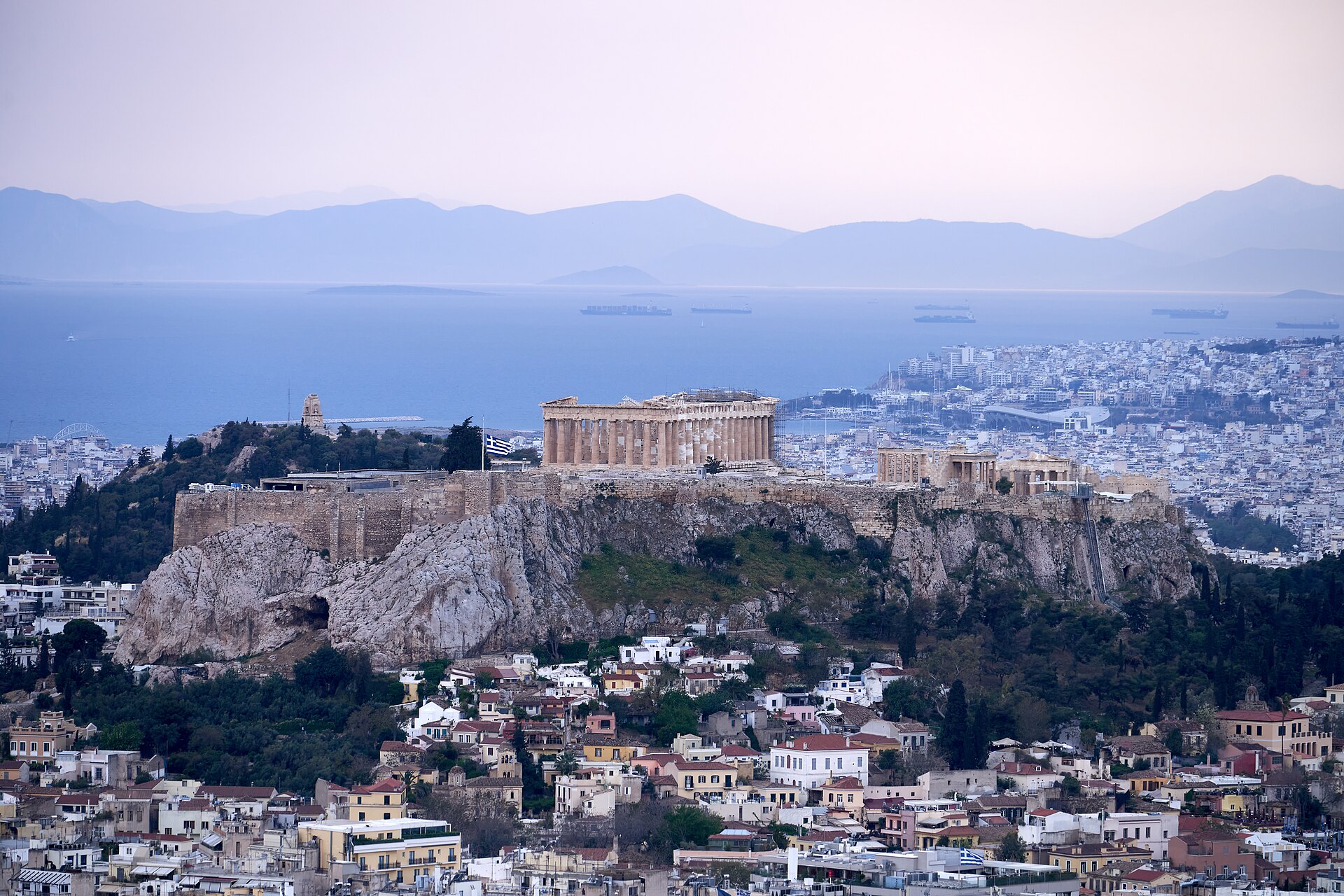
The great monuments we see today were built in the fifth century BC, during the golden age of Athens under the statesman Pericles, when the city was the leading power and cultural centre of the Greek world. Flush with wealth and confidence, Athens undertook a vast building programme to honour its gods and proclaim its glory.
The Parthenon, a temple to the goddess Athena, patron of the city, is the crown of the Acropolis. Built of gleaming white marble, it is celebrated for its perfect proportions and the subtle refinements, columns that swell slightly and lean inward, that make it seem flawless to the eye. It once held a giant statue of Athena.
The Parthenon's apparent simplicity hides extraordinary precision. There is scarcely a straight line in it; nearly every element curves or tilts by a tiny amount to correct for the tricks of human vision and to give the building its living harmony. It was raised in just a few years, an astonishing feat of ancient engineering.
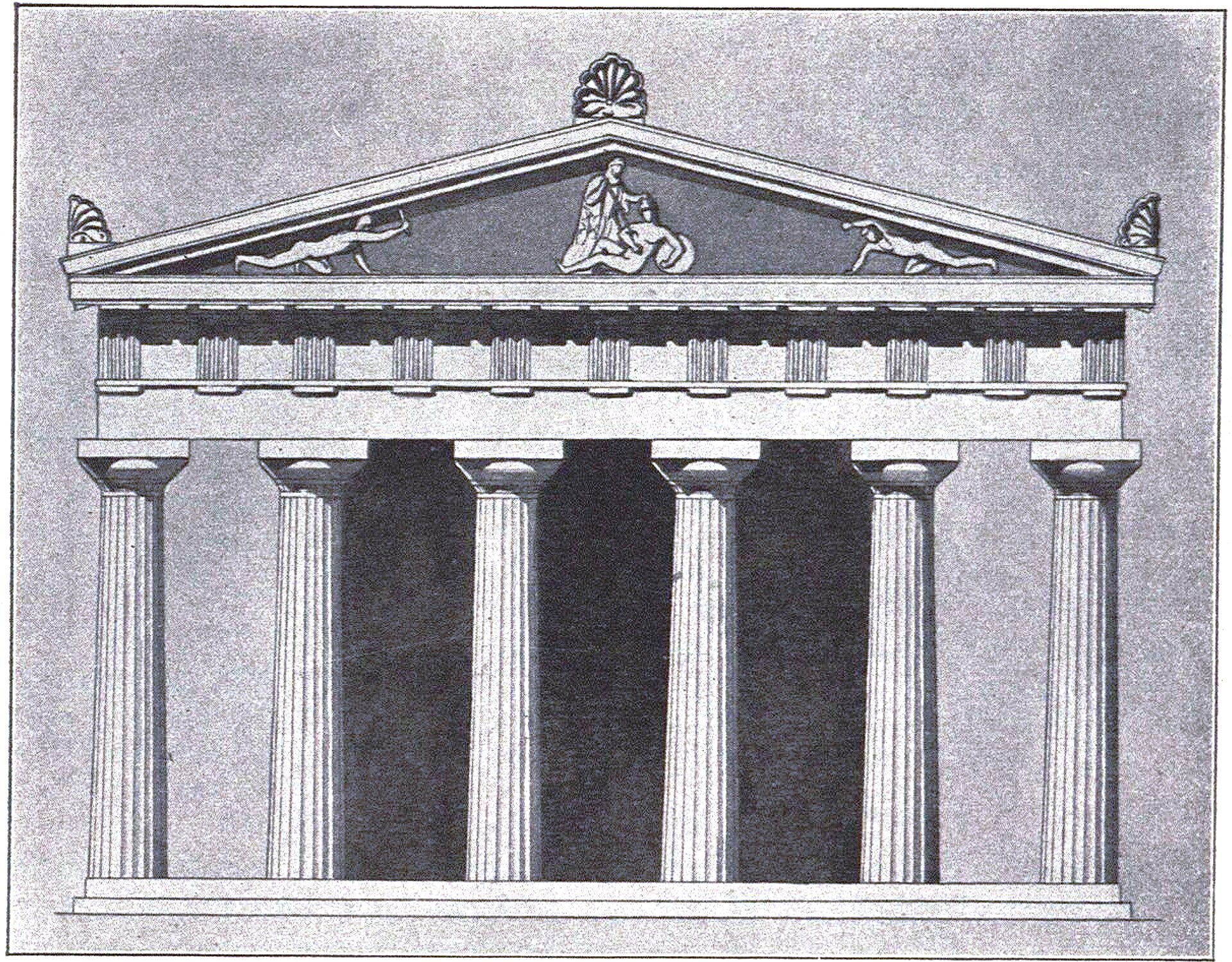
The Acropolis holds other treasures besides the Parthenon. The elegant Erechtheion is famous for its porch supported by sculpted maidens, the Caryatids. The grand gateway, the Propylaea, and the small, jewel like temple of Athena Nike complete a complex designed as a single magnificent ensemble.
The buildings were adorned with some of the finest sculpture of the ancient world, depicting gods, heroes, and great processions. Many of these carvings, including the famous Parthenon marbles, were later removed and are now scattered among museums, their ownership a subject of long running international dispute.
Over the ages the Acropolis served many purposes. The Parthenon became a Christian church, then a mosque, and at one point a powder store, which exploded during a war in 1687, blowing out the centre of the building. War, looting, and time have all taken their toll on the ancient stones.
Today the Acropolis is a UNESCO World Heritage Site and one of the most visited monuments in the world, carefully restored and studied. It stands as a lasting emblem of ancient Greek art, democracy, and ideas, which continue to shape culture far beyond Greece, a monument to the achievements of the classical world.
